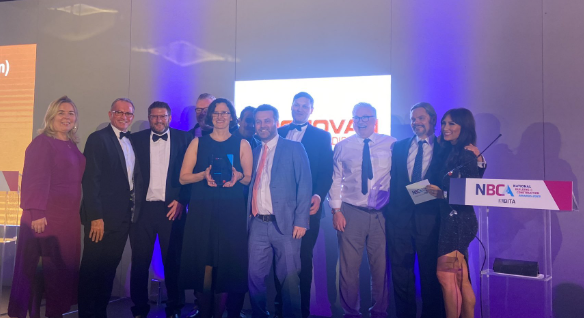
National Building and Construction Project of the Year Award winner
Project Works and Key Quantities
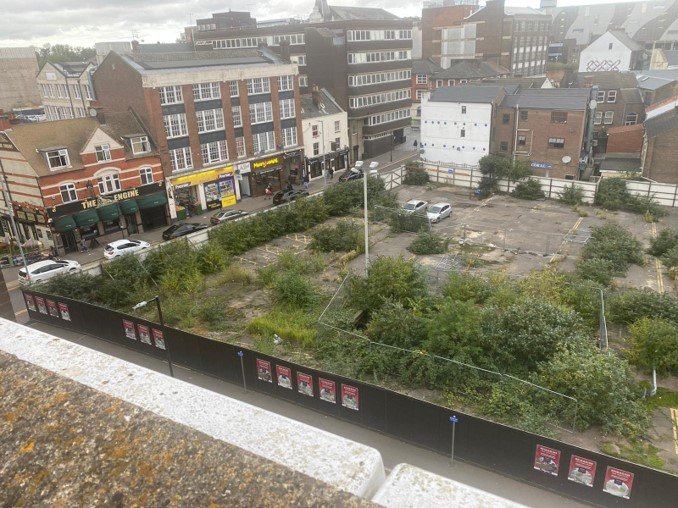
The car park was forced to close after a structural defect was identified in the culvert, and although there was a repair budget available, the costs were prohibitively high so it was kept shut and the area became a wasteland.
The site was known to have issues with flooding, with risks to nearby housing and businesses if the culvert collapsed, but there was also a sheer lack of green space in the town centre for local residents and workers, so council officers discussed rejuvenating the area by opening up the river and turning it into a park, helping to restore the rare chalk stream which makes up the Lea and tying into a town centre masterplan for the next 20 years.
The council identified that the £1.6m scheme could be part-financed using European Regional Development funding, and so it worked up the concept, secured planning permission and opened it up for tender, with Ryebridge Construction winning the bid.
• Bulk Excavation 1,930m3
• Retaining Walls/Head walls 2no. 30m3 East Headwall and 35m3 West
• Gabion Baskets 140m3
• Landscaping 642m2
• Large Trees 7no.
• Block Paving 332m2
• Resin Bound Paving 123m2
• Bespoke Stone copings along renewed River Walls 70m
• Roads and Taxi Rank 355m2
Project Principles and Objectives
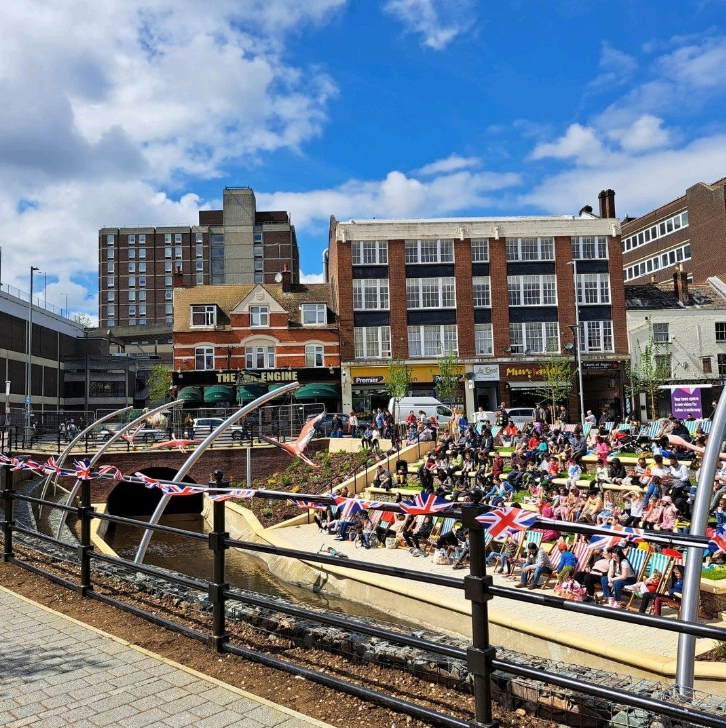
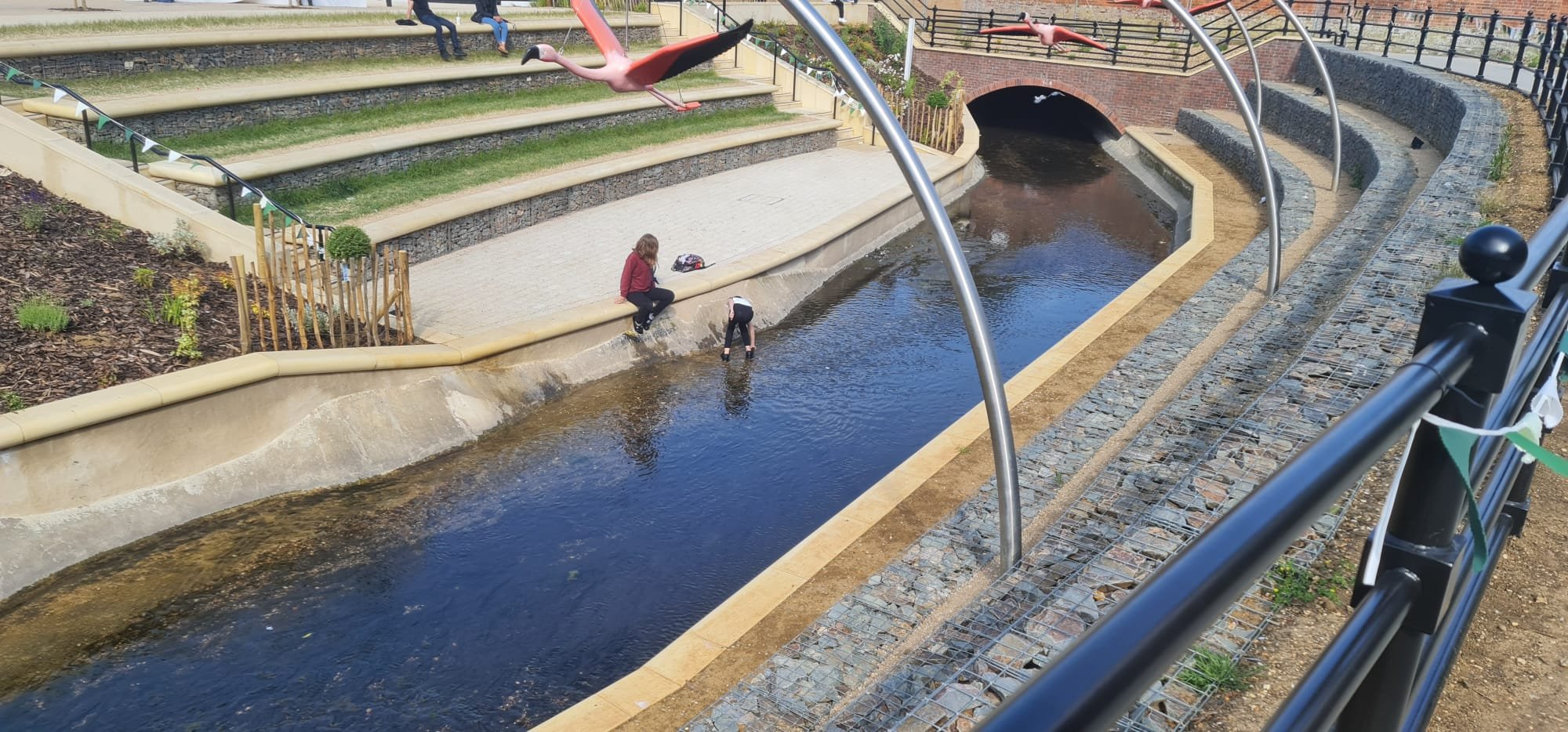
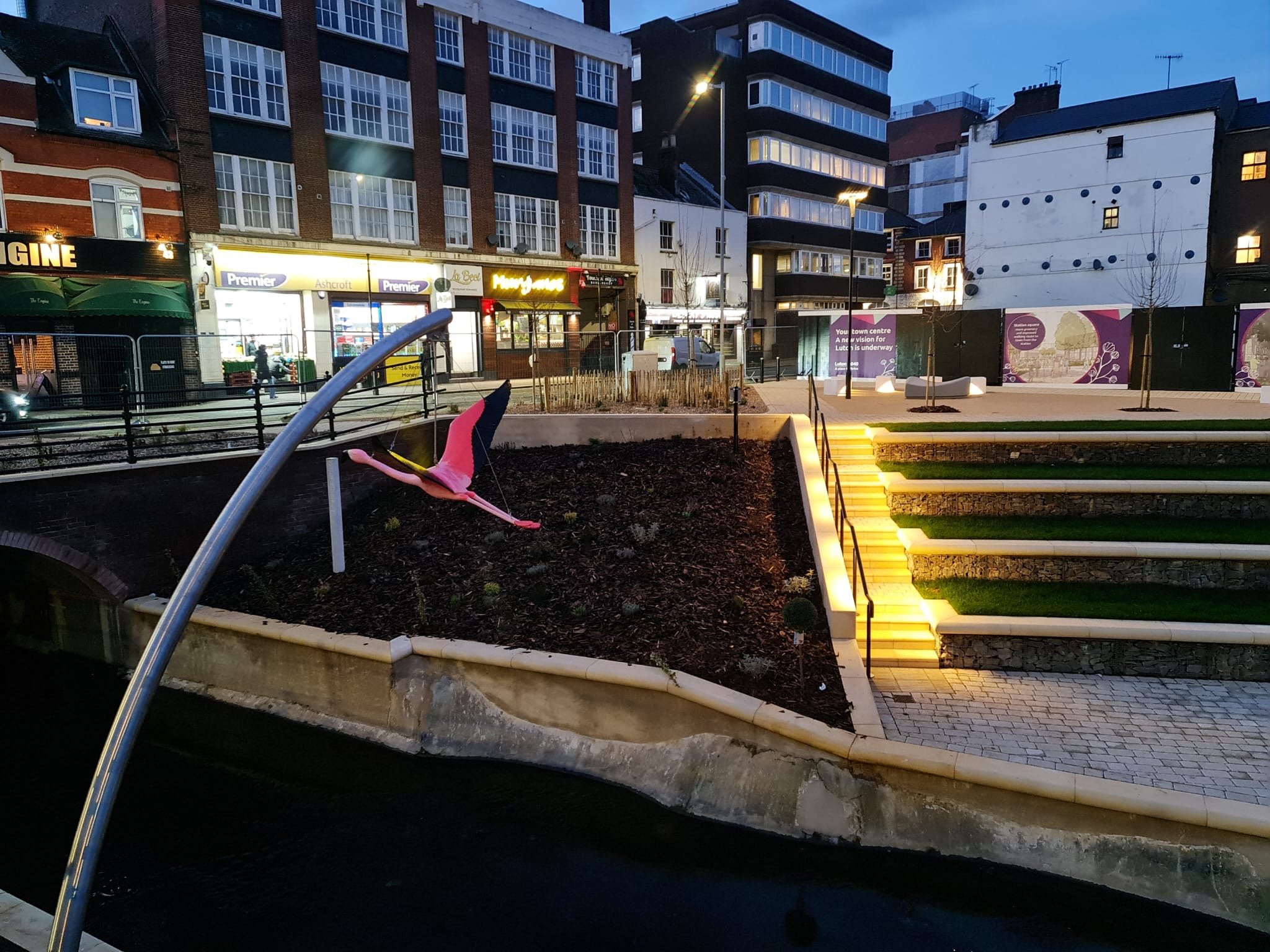
Part of the Open Lea project, Hat Gardens saw the transformation of a disused car park into an asset of community value by opening up the concealed river culvert.
The project was secured by competitive tender at RIBA stage 3. Ryebridge was to undertake a full design and build including responsibility for three significant risks: Design completion; contaminated ground (site investigations had identified this); Environmental Agency approval/sign off.
All works delivered on budget with all funding milestones achieved.
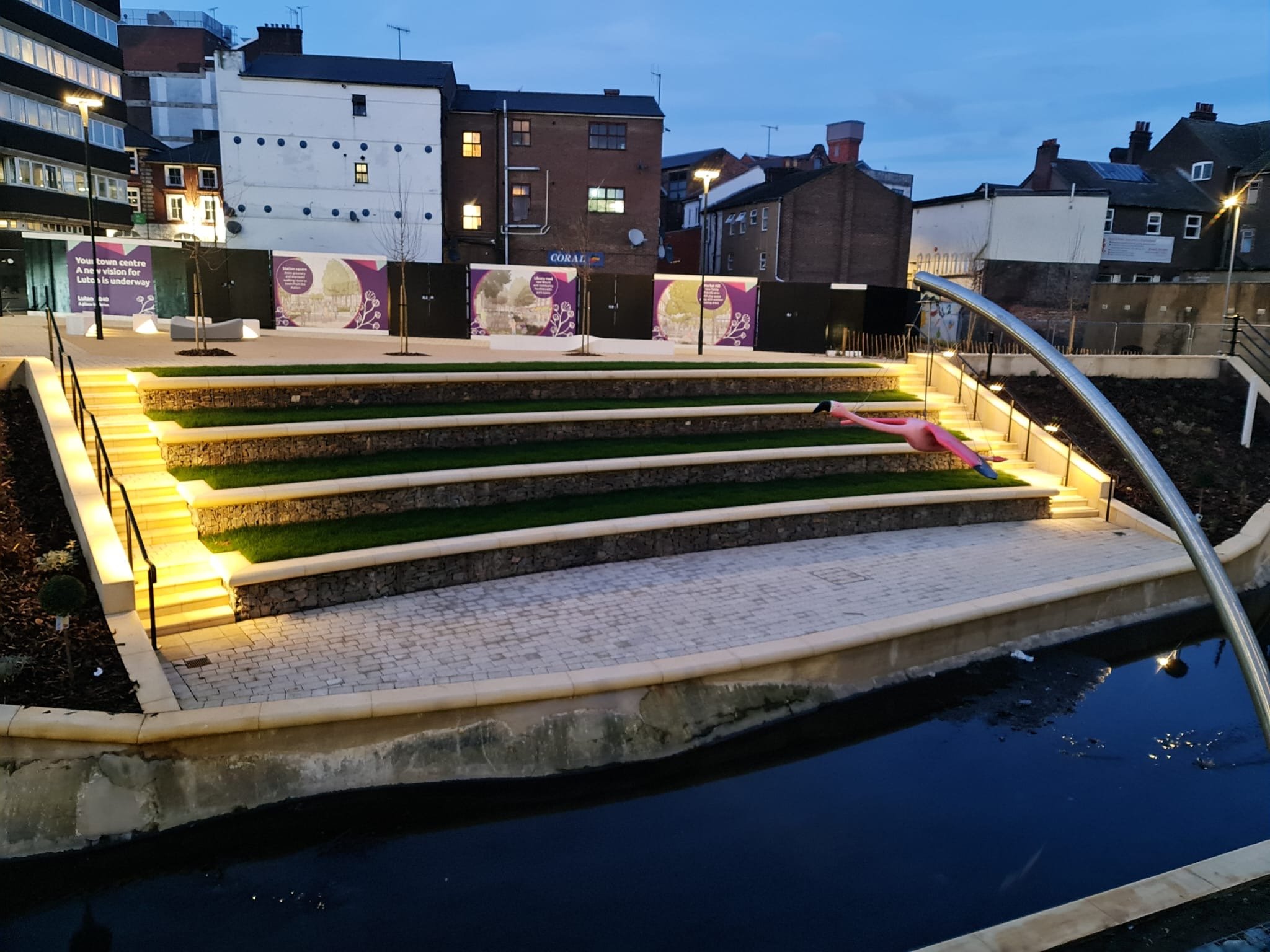
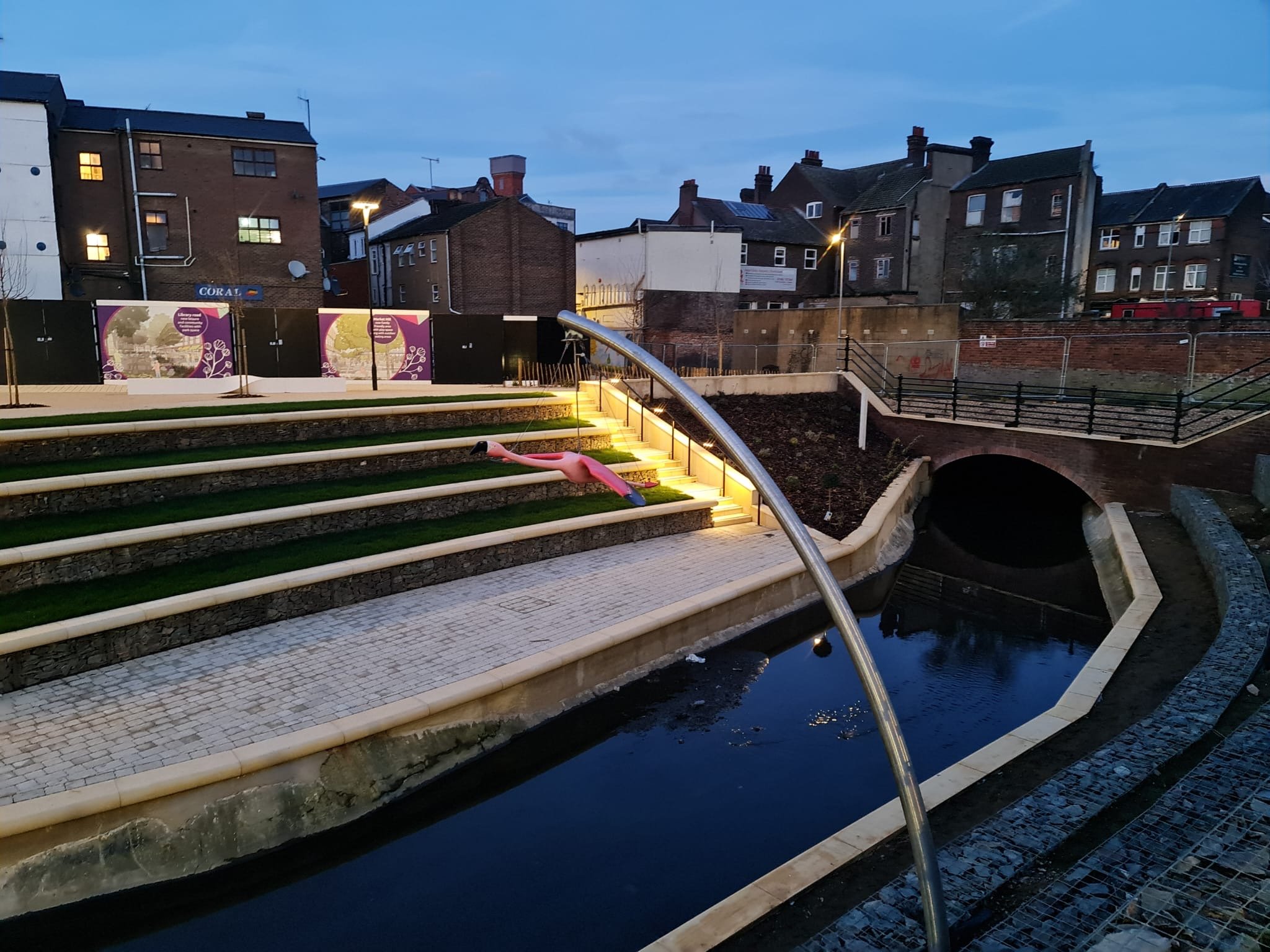
The Hat Gardens Open Lea Project transformed a disused and structurally defective town centre car park into a new public open space by opening up a previously culverted section of the River Lea.
The project formed part of the wider Open Lea regeneration programme and involved removal of the existing culvert structure, river restoration, flood risk improvements, environmental enhancement and significant public realm works within a constrained urban environment. The scheme delivered substantial social, environmental and regeneration benefits whilst creating new ecological habitats and enhancing a rare chalk stream corridor.
The works required the diversion of the River Lea using temporary pipework to facilitate safe removal of the existing culvert and construction of new riverbanks, retaining structures and public realm features. Key elements included:
1,930m³ bulk excavation.
Construction of new reinforced retaining walls and headwalls.
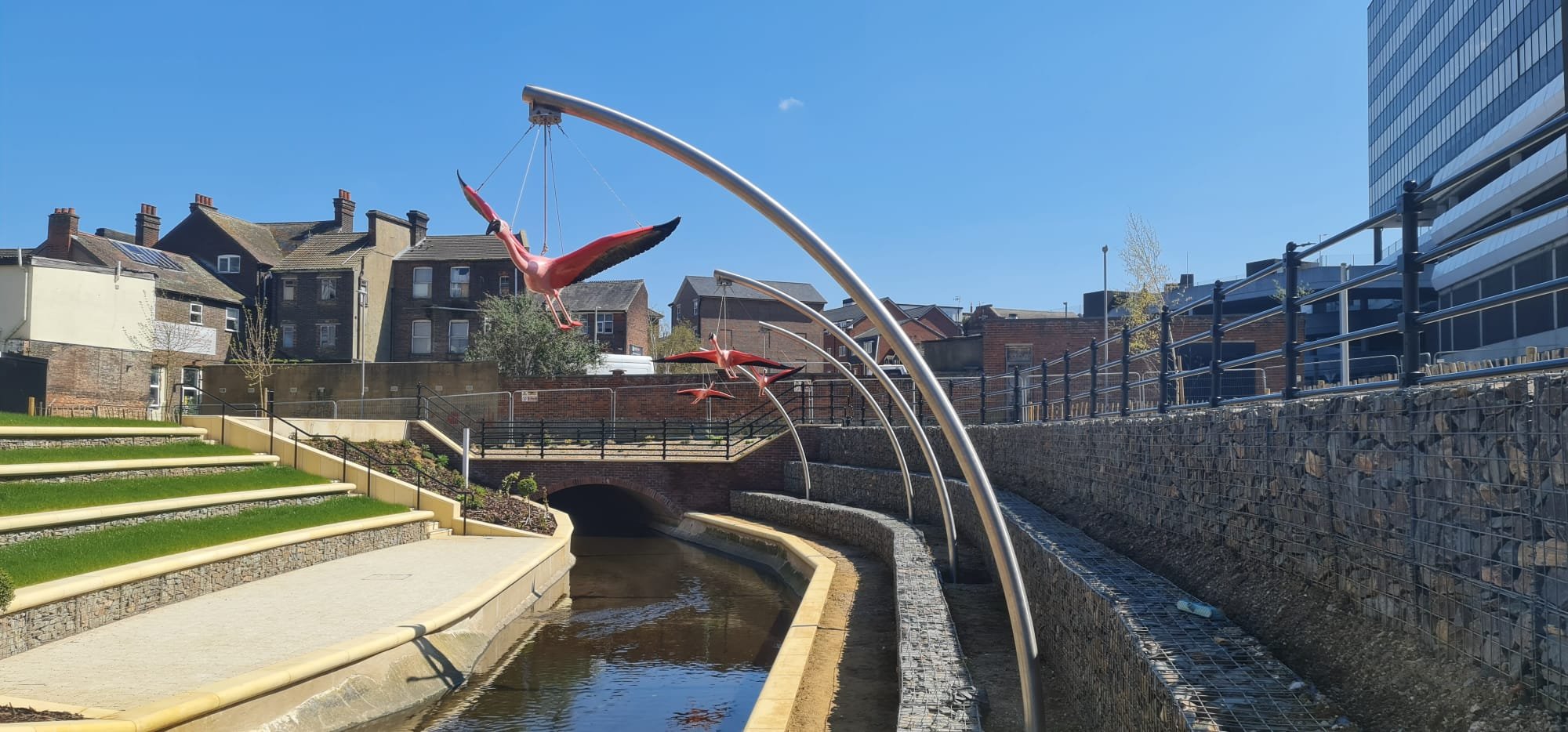
Installation of 140m³ of gabion retaining structures.
Construction of hard and soft landscaping including paving, seating terraces and public spaces.
Delivery of Sustainable Urban Drainage Systems (SuDS).
Highway and taxi rank modifications.
Ecological enhancement works alongside a rare chalk stream environment.
A key challenge was undertaking river engineering works within a confined town centre location whilst managing contamination risks, adjoining highways, utilities, public interfaces and environmental constraints. Close liaison was maintained with the Environment Agency throughout delivery.
Programme, Risk and Interface Management
The project involved numerous stakeholder interfaces including Luton Council, the Environment Agency, archaeologists, utility companies, highways authorities, local businesses and residents.
Risks associated with environmental approvals, contaminated ground, river diversion activities and archaeological discoveries were identified early and managed through collaborative planning and ongoing stakeholder engagement.
The project also required coordination around existing transport infrastructure, neighbouring commercial premises and town centre access routes to minimise disruption during construction.
Environmental controls and monitoring were implemented throughout the works to protect the watercourse and surrounding environment.
Ryebridge worked collaboratively with Luton Council and a wide range of specialist stakeholders throughout the design and construction process. The project required extensive engagement with the Environment Agency to secure approvals associated with works adjacent to and within the River Lea. Ecologists and archaeologists were integrated into project delivery to ensure environmental compliance and preservation of heritage features where appropriate.
The Design and Build procurement route enabled buildability, environmental requirements and stakeholder feedback to be incorporated into the evolving design, supporting efficient delivery and management of project risks.
Innovation and Best Practice
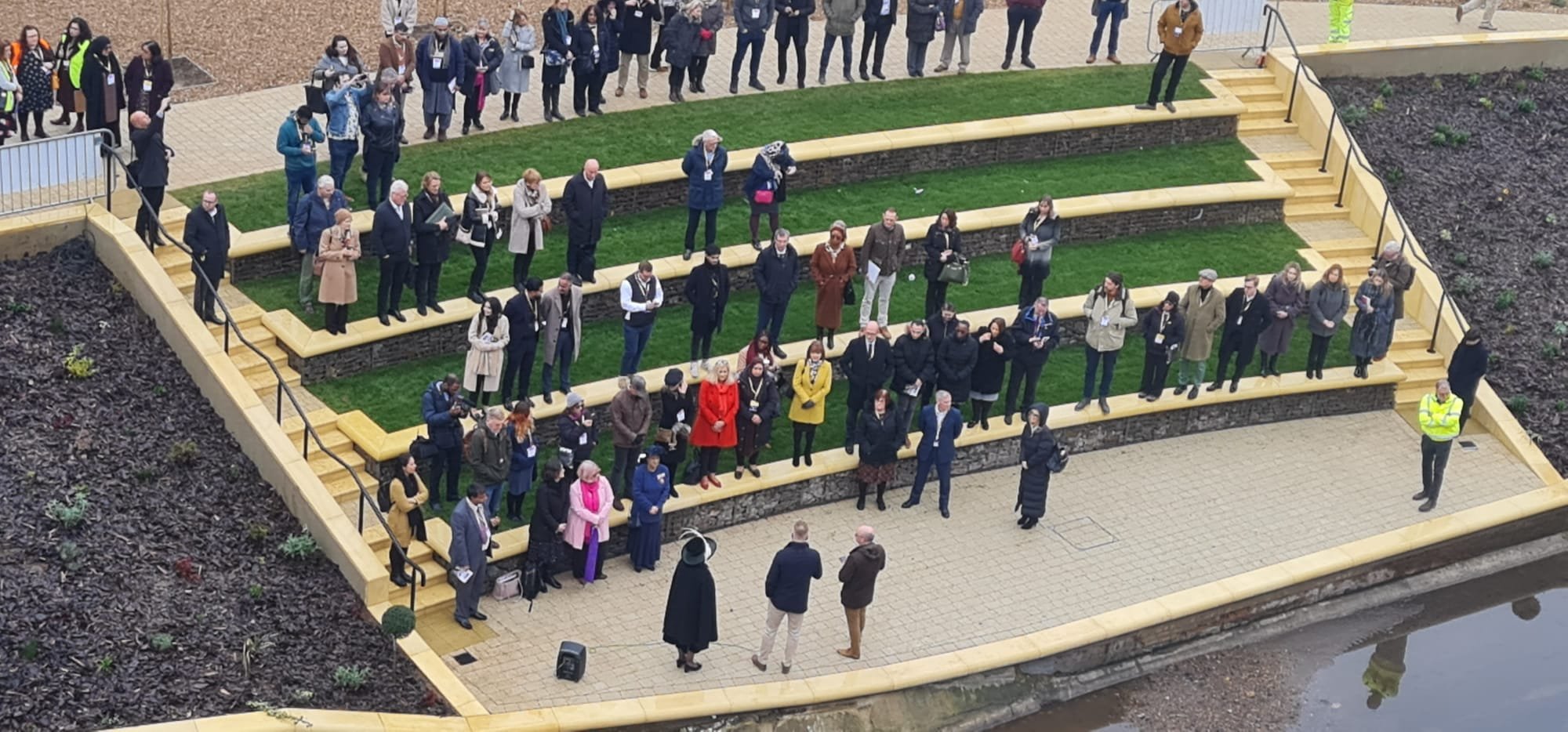
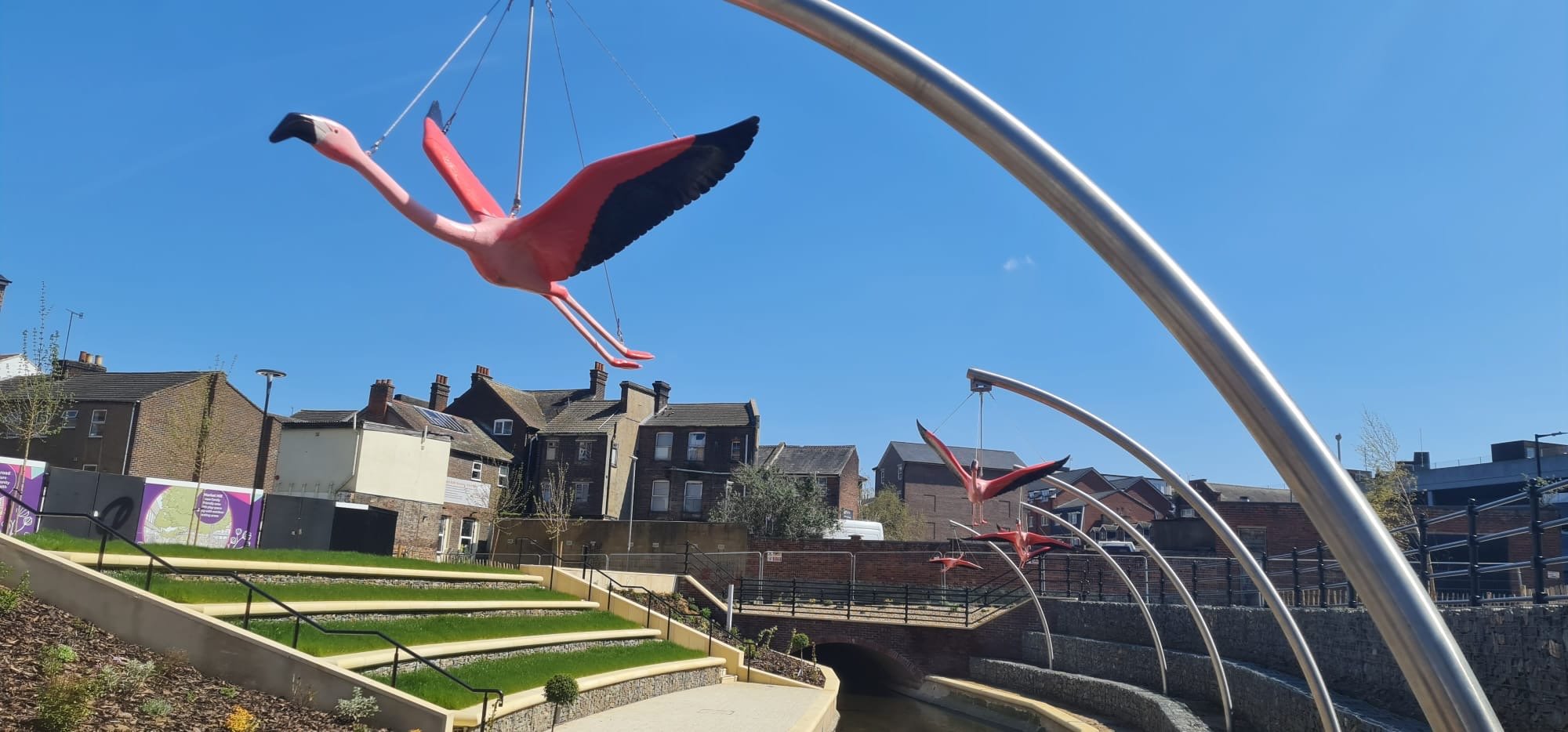
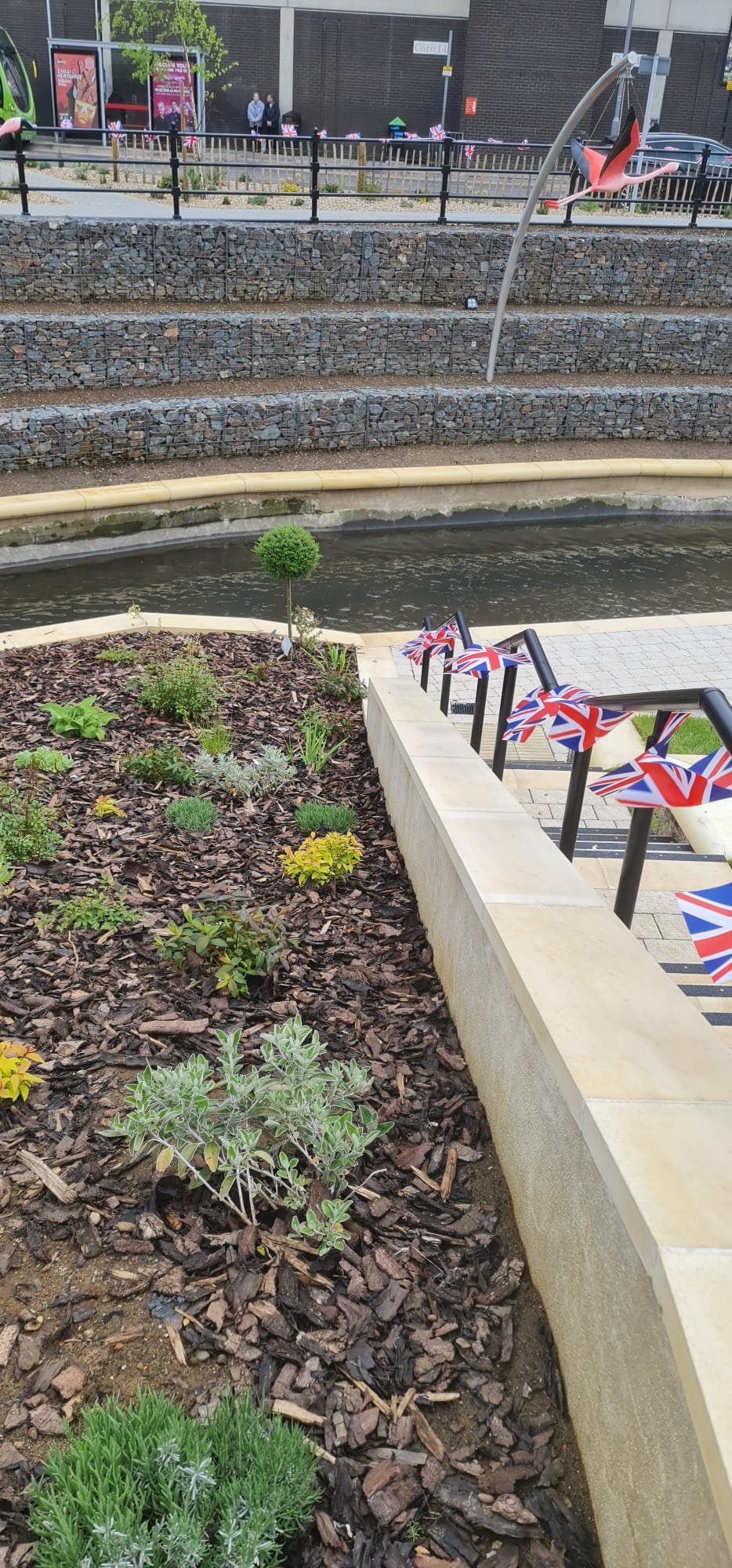
The works involved removing the existing lid to the river, building new head walls and retaining walls, and constructing new stepped seating and a planted terrace populated with carefully selected vegetation designed to boost wildlife.
It was not a standard building project, and part of the work involved diverting the river using piping to access the culvert itself, which was then removed and replaced, forming a new bank and terrace for the river.
The scheme involved having to consider adjoining highways and clearing areas of contamination left behind on the site, with Sustainable Urban Drainage Systems incorporated into the design alongside soft and hard landscaping.
The project involved close liaison with the Environment Agency to ensure compliance working alongside and over an extremely rare chalk stream.
An archaeologist was also present to follow the progress of the excavation works and see if any historical elements were found, adding an extra element to the works.
The project reinforced the importance of early engagement with regulatory bodies, particularly where works interface with live watercourses and environmentally sensitive habitats. It demonstrated the benefits of integrating environmental management, stakeholder engagement and construction planning from the outset of a project.
Moving Forward
The project was delivered successfully within the approved budget and achieved all funding milestones. The completed scheme restored a previously inaccessible section of river, improved biodiversity, enhanced the local environment and created a valuable community asset within Luton town centre.
The project received national recognition when it was named National Building and Construction Project of the Year in 2023. The scheme also acted as a catalyst for future phases of the Open Lea programme and additional river restoration initiatives.