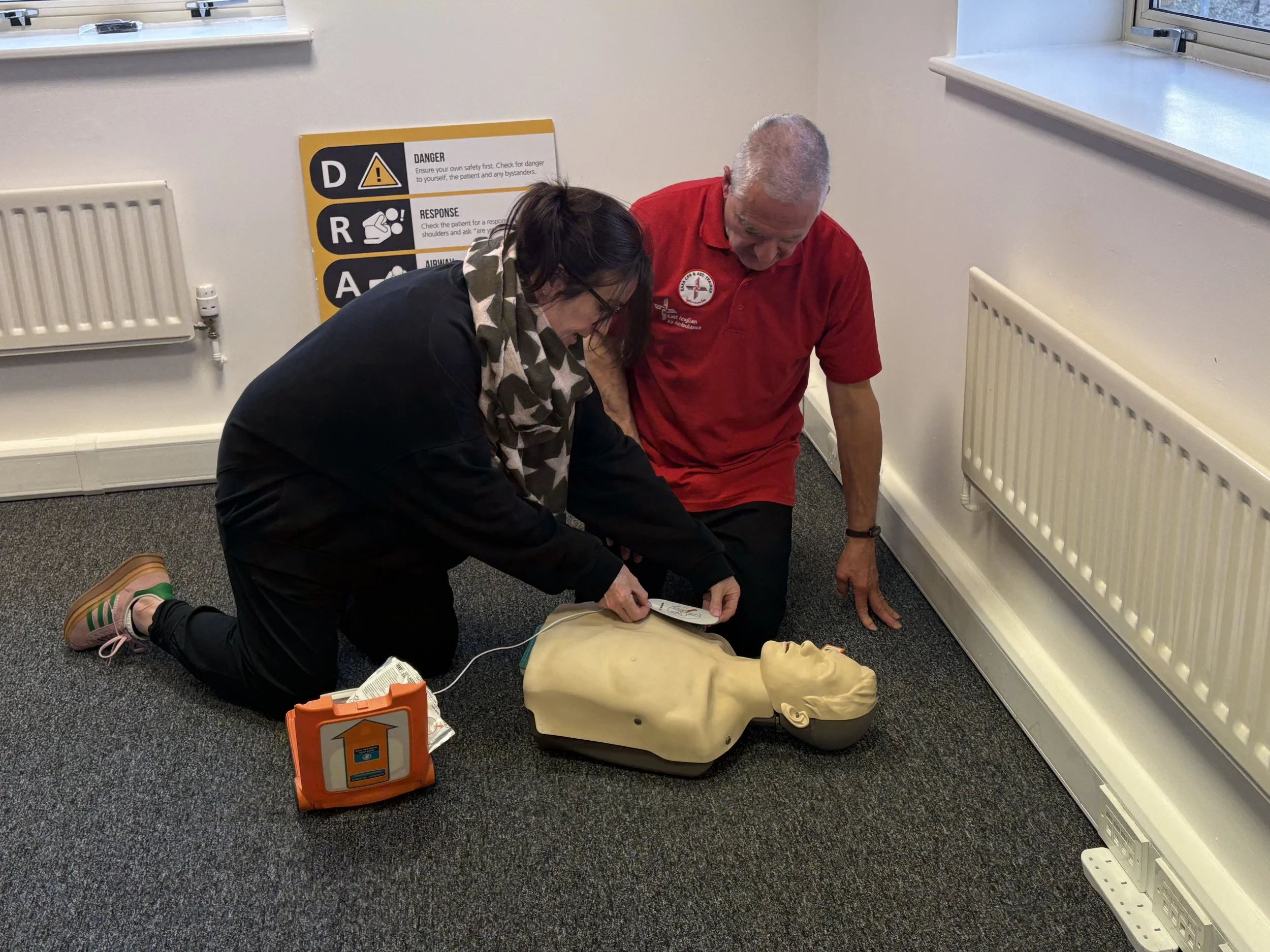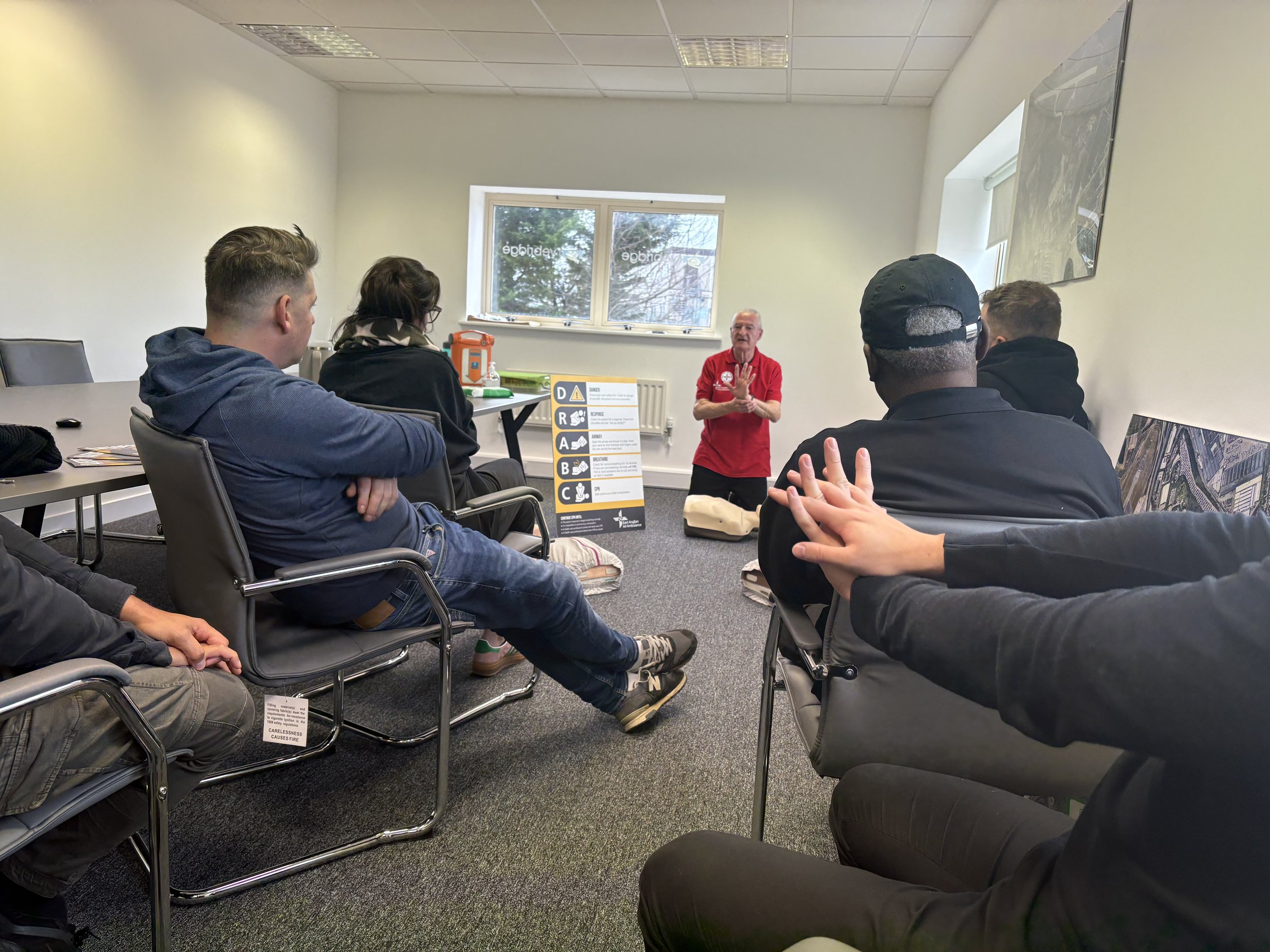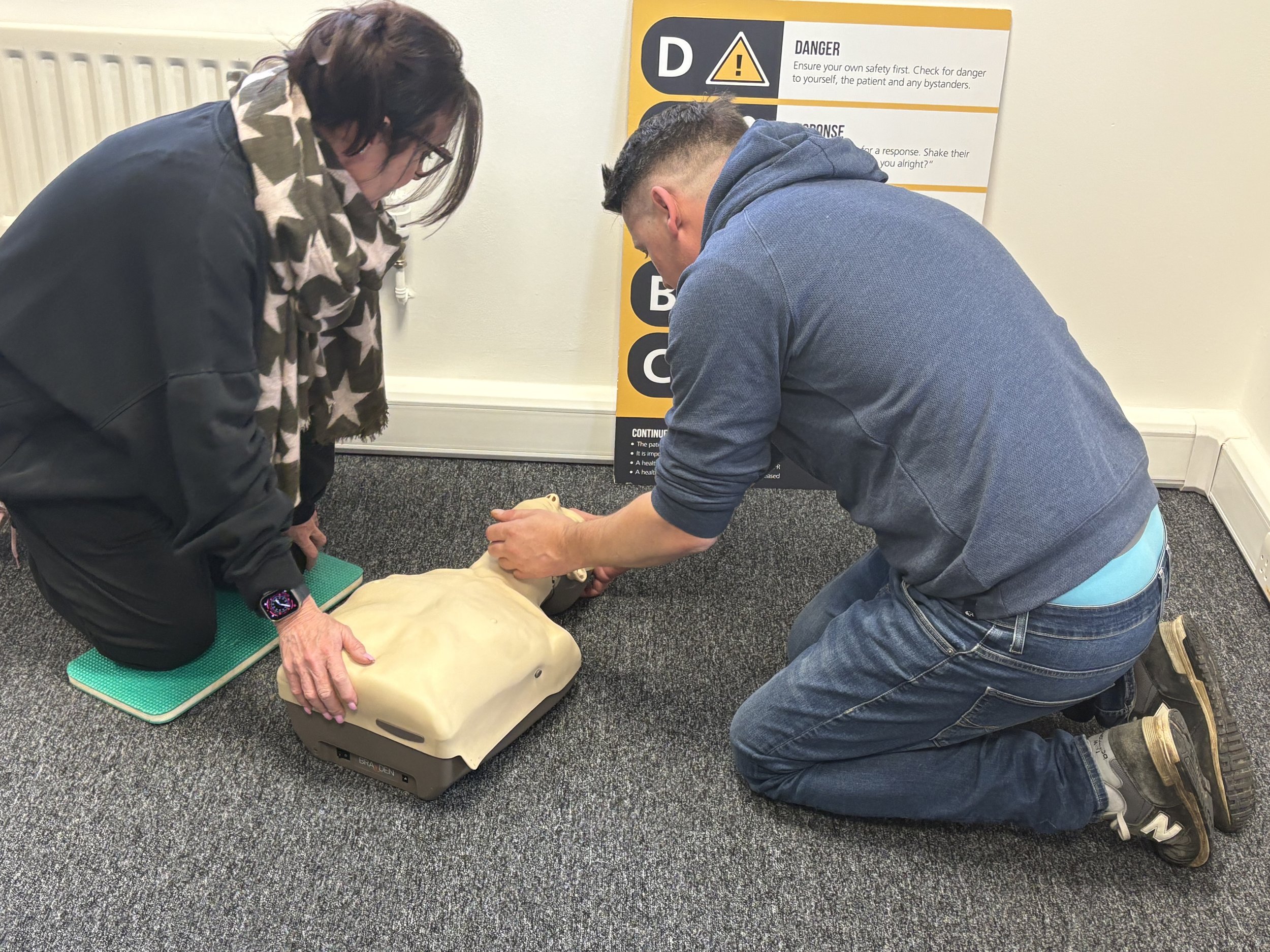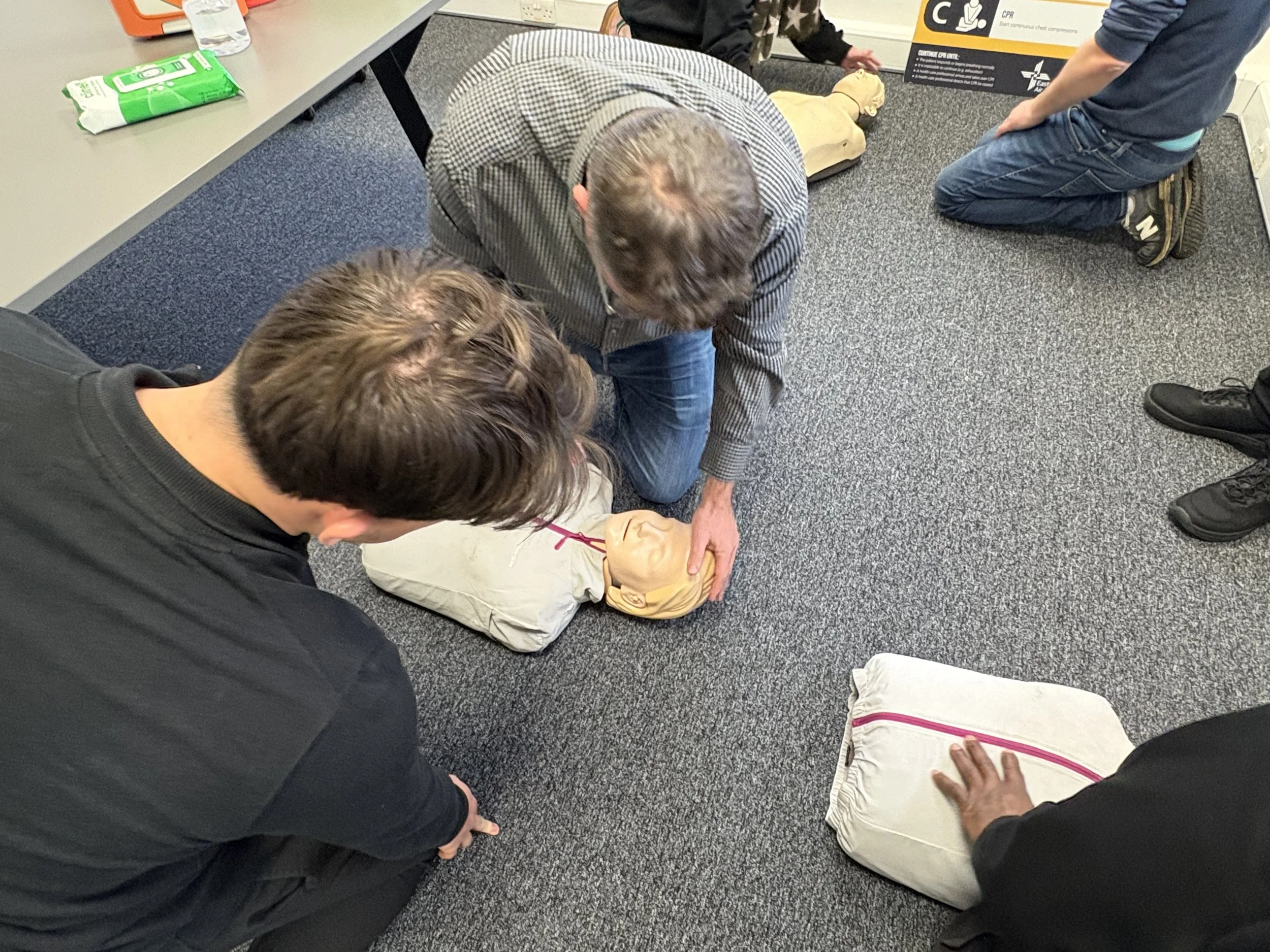
Restarting the heart of someone who has suffered a cardiac arrest is time-critical, with every minute the brain is deprived of oxygen contributing to a 10 per cent deterioration in its condition.
So training in how to effectively perform CPR and use a defibrillator is essential, because it can literally save lives.
That’s why Ryebridge Construction makes sure both site and office staff attend courses run by East Anglian Air Ambulance (EAAA) on how to carry out these procedures in the event they come across a cardiac arrest victim.
The company has six defibrillators carried in Ryebridge vehicles, alongside others in our offices and site buildings.
Cardiac arrests can affect people of any age, but 95 per cent are the result of existing medical conditions, and 65 per cent of victims are men. For the 30-40,000 people who experience a cardiac arrest outside hospital each year, the survival rate in the UK is just 8%, but using a defibrillator alongside effective CPR within the first three to five minutes can increase this to between 40-70%.
Although CPR will keep oxygen moving to the brain and buying time before an ambulance arrives, using a defibrillator will actually shock the heart back into its normal rhythm, and ensures a much better chance of survival.
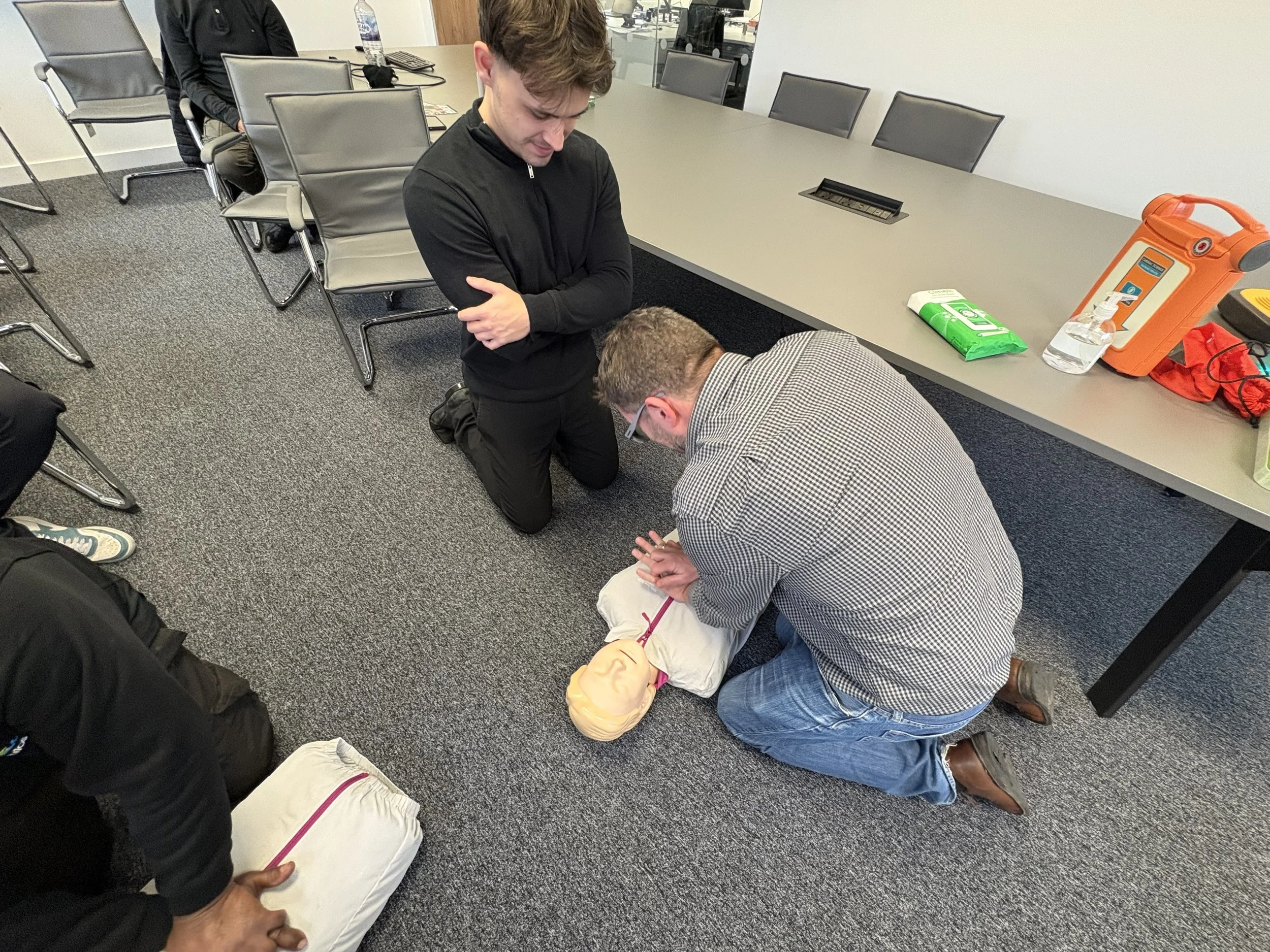
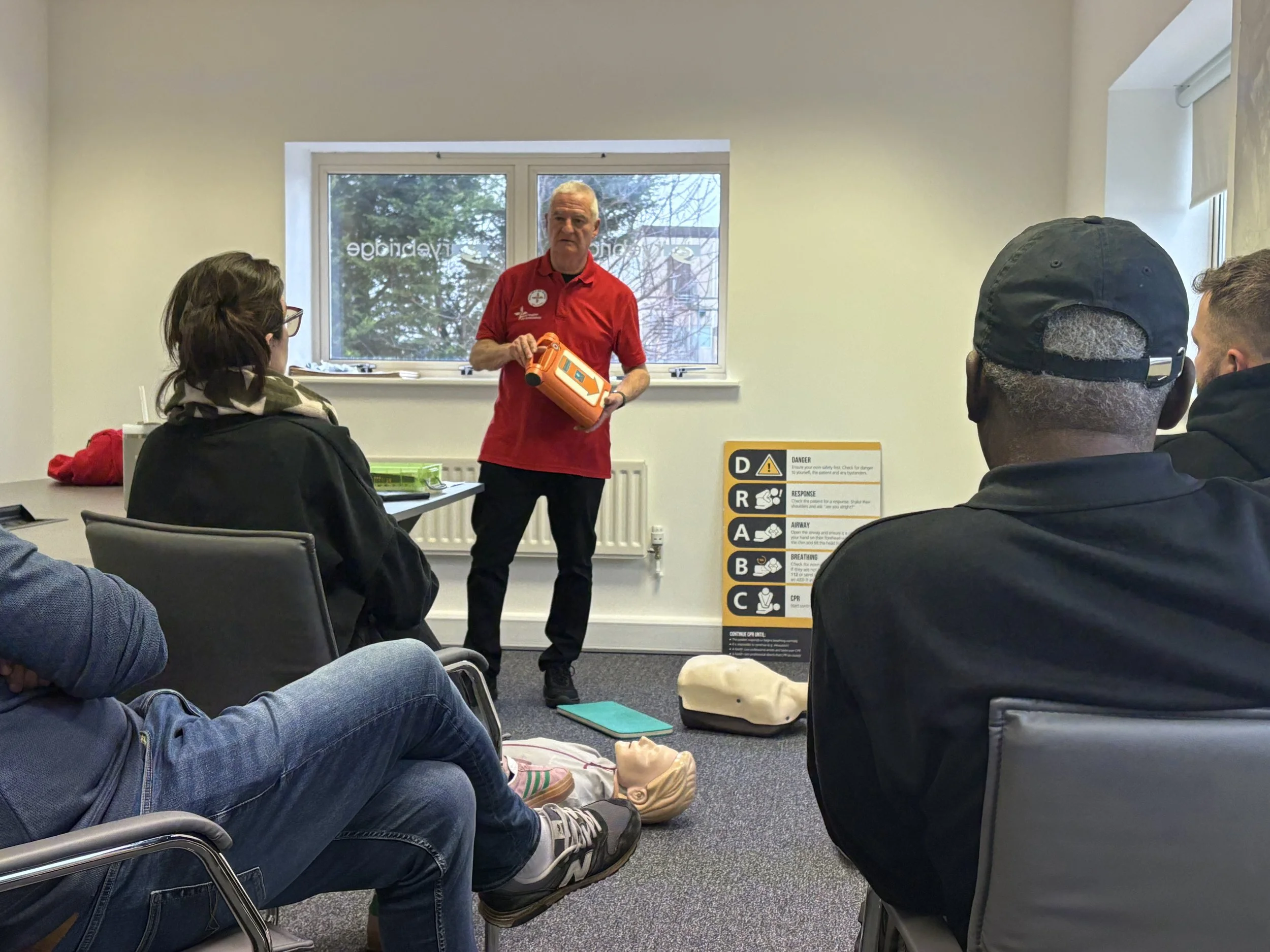
This week saw the latest group of Ryebridge staff receive training by a CPR and defibrillator instructor from EAAA, including managing director Sean Scully, transport manager Junior Charles, and trainee quantity surveyor Mason Pender, representing different roles across the company.
Staff were shown how to make a diagnosis of a cardiac arrest as opposed to a heart attack, in that the person will be unconscious, not breathing, non-responsive and technically dead, so it is crucial to start CPR immediately in order to provide oxygenated blood to the brain.
This involves tracing a path from the armpit to the centre of the chest, and pushing down hard at 120 beats per minute in a rocking motion. While this is taking place, 999 should be called and if someone else is available to help then a defibrillator should be fetched.
Automated External Defibrillators (AED) will prompt the user through each instruction from the moment it is opened, so anyone can use one if available, but being trained in the process will save time. The machine will make the decision when to shock the patient, so it is not the responsibility of the user, but the key thing is to get it in place as soon as possible.
Following the training, Sean said: “Although I knew it was important to use a defibrillator as quickly as possible, I had no idea how straightforward it was to use the machine. This training could be a life-saver for one of our staff, our contractors or a member of the public who has suffered a cardiac arrest, and while we hope it never happens, it’s good to know we’re ready if it does.”