Project Objectives
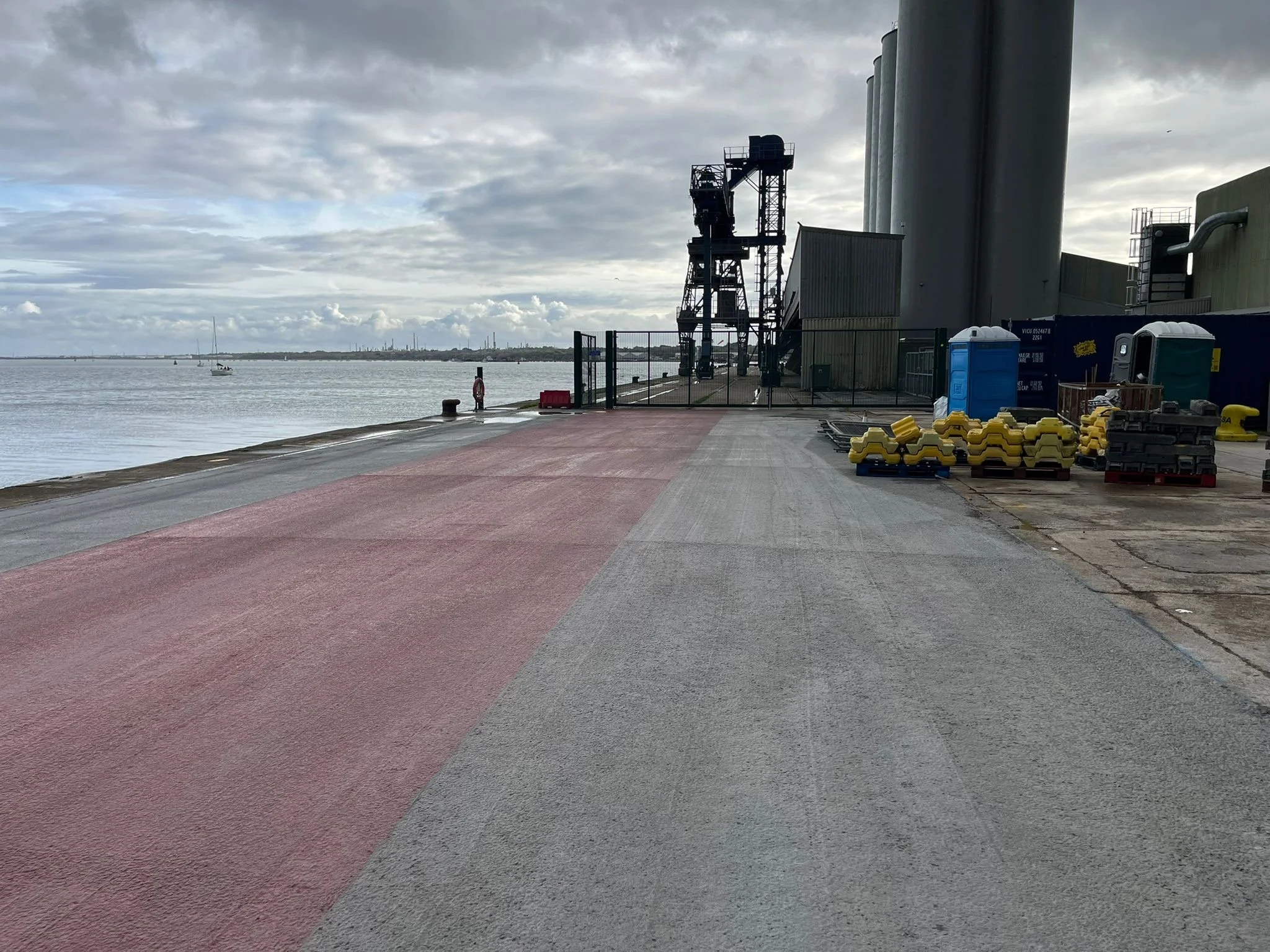
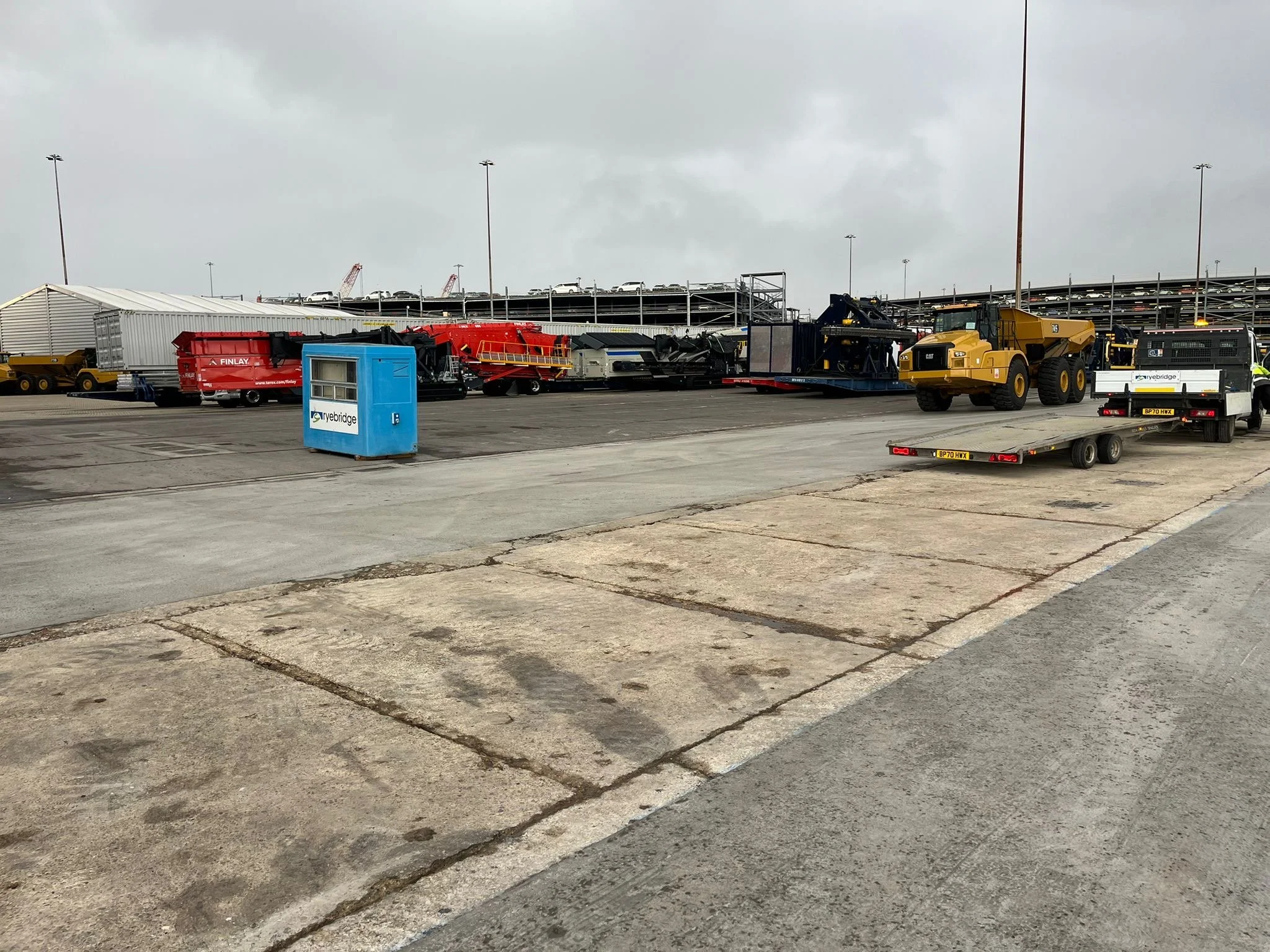
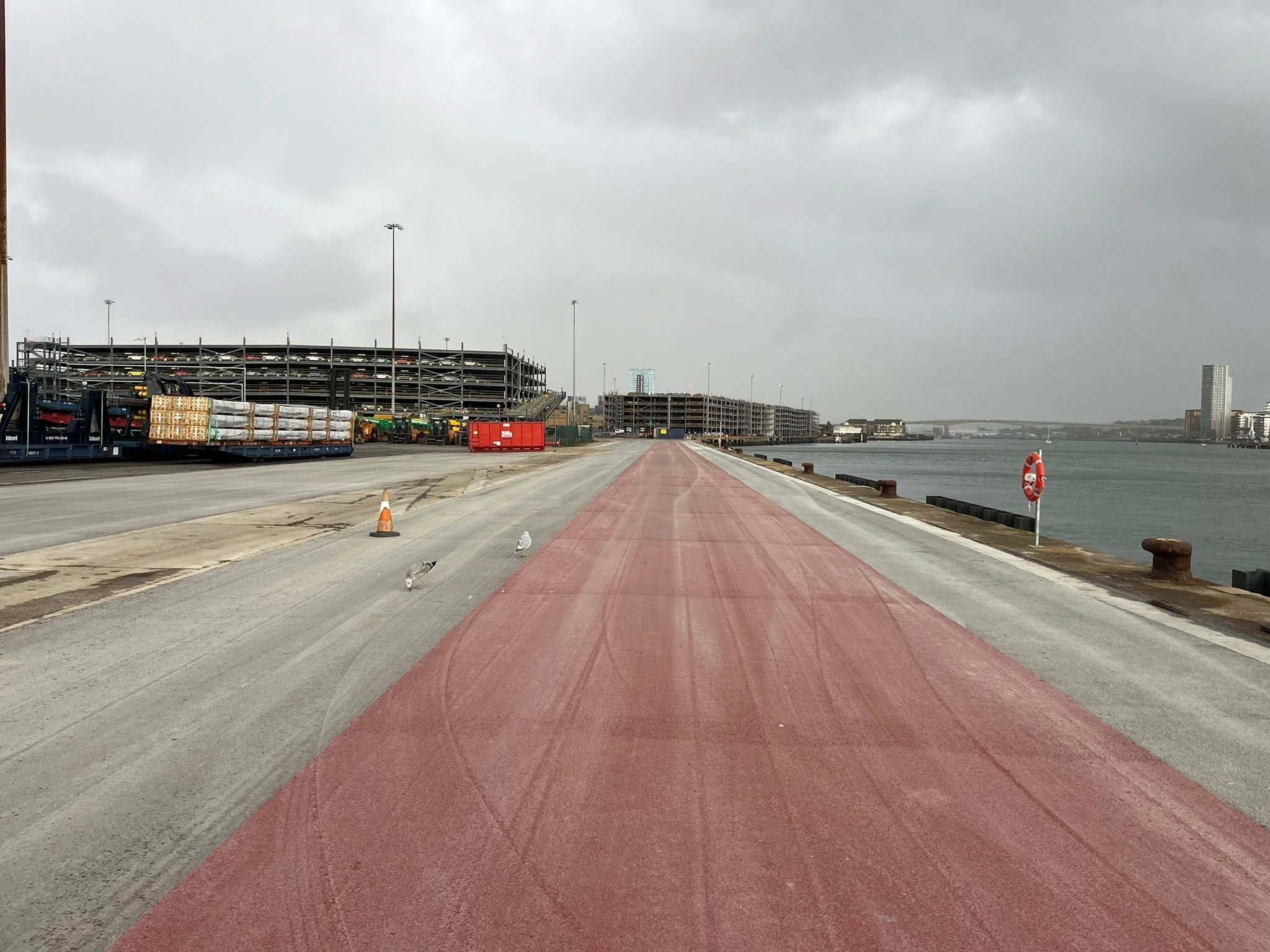
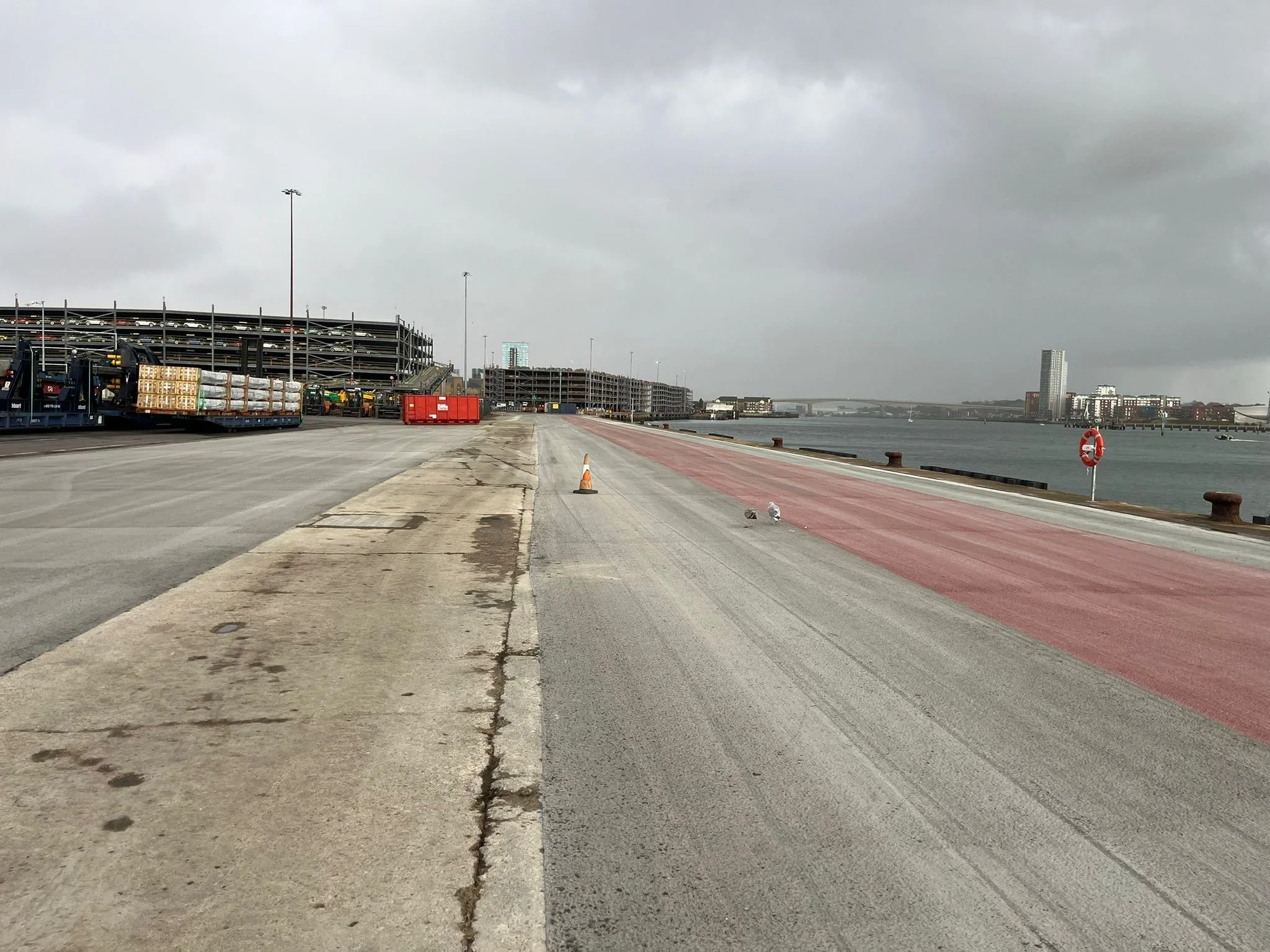
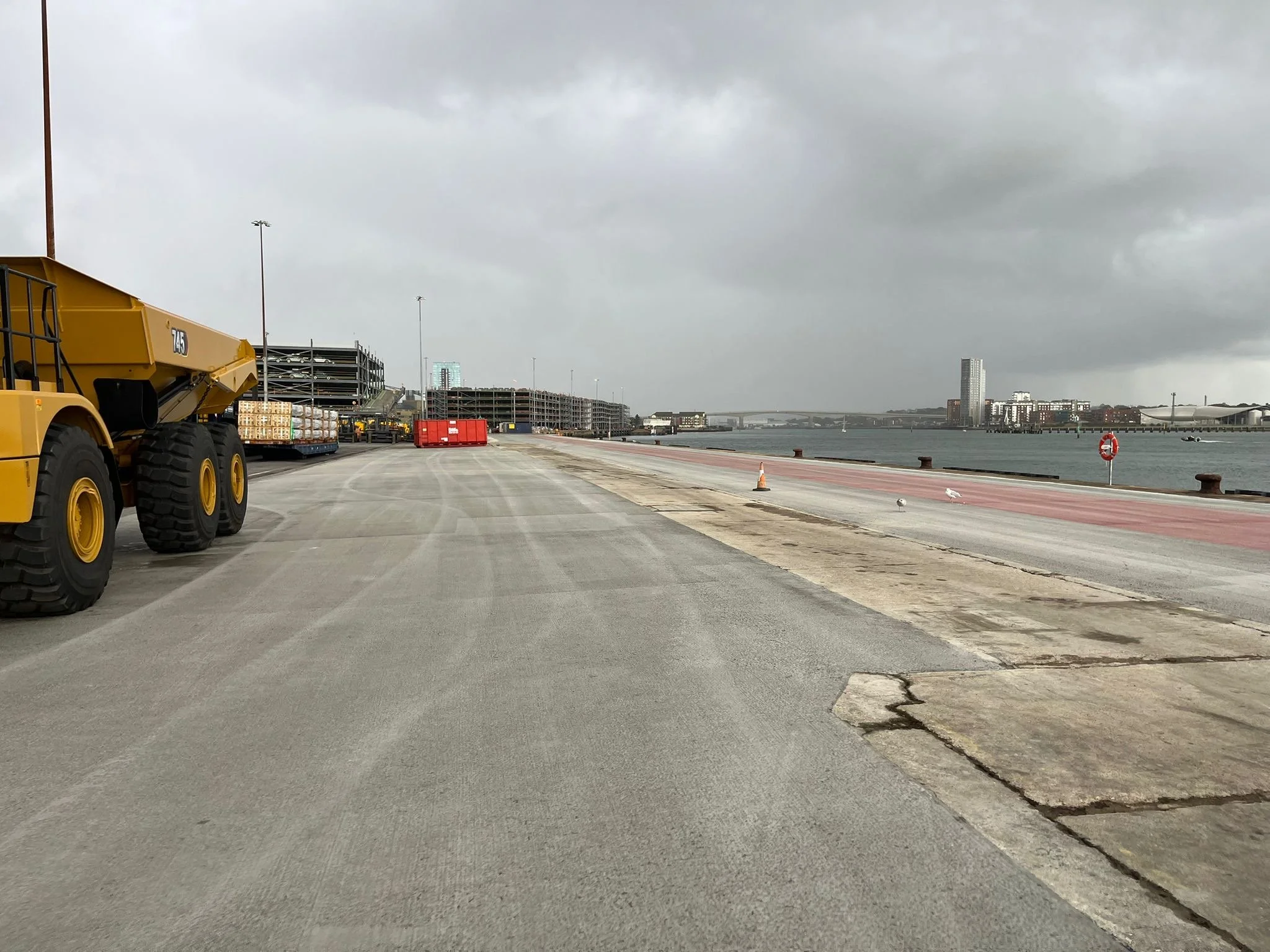
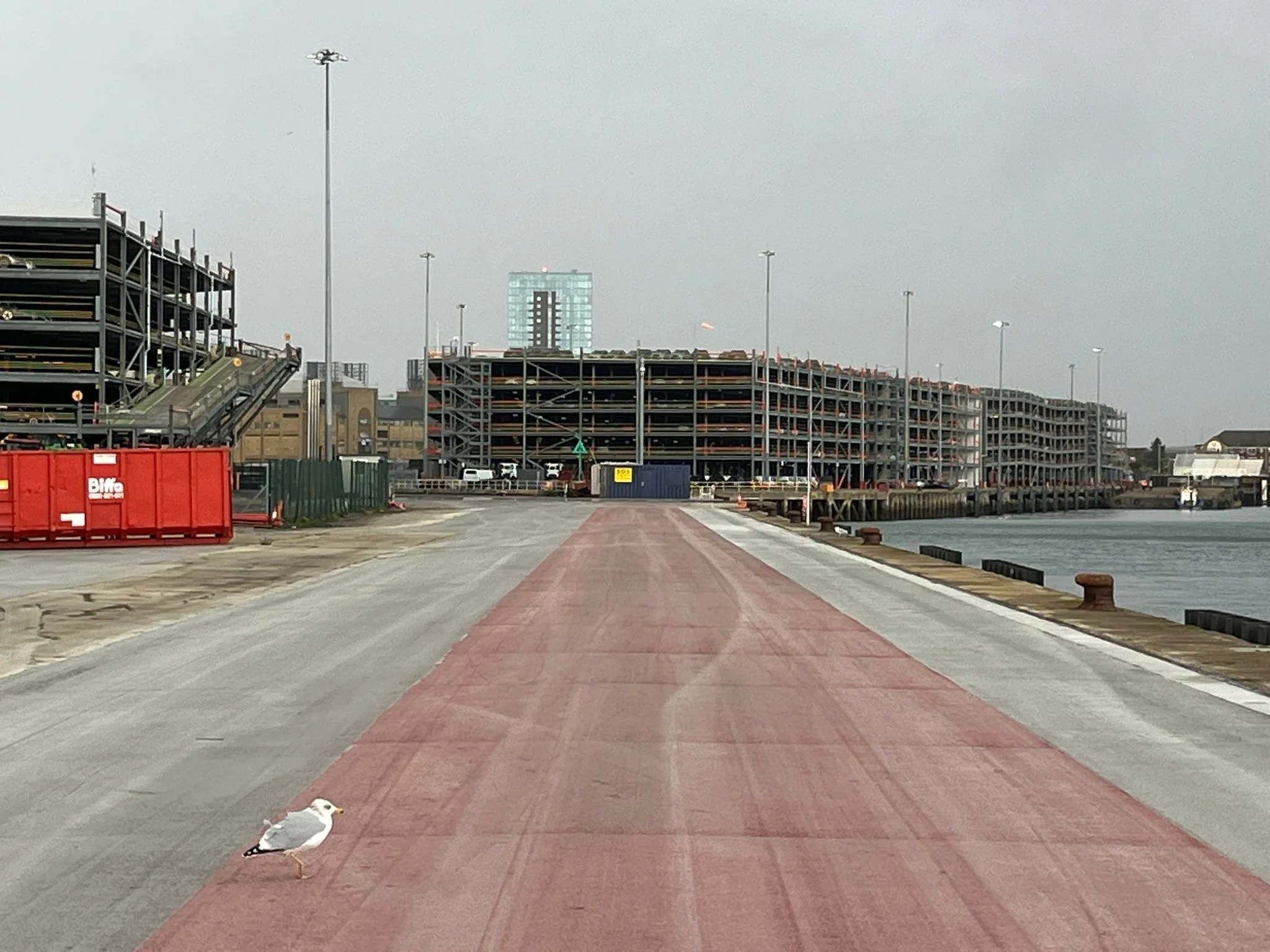
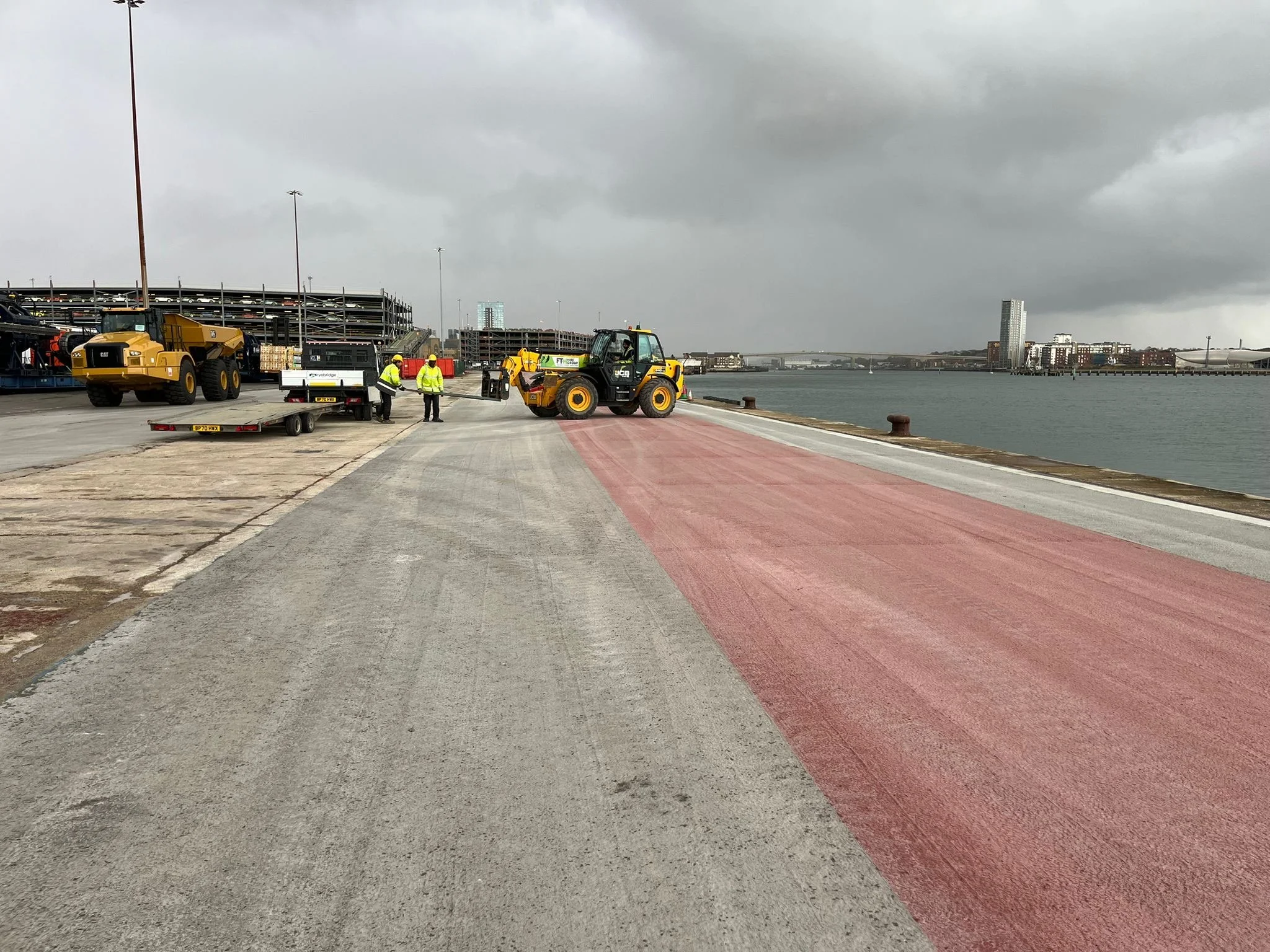
The project, at Berth 35 at the Port of Southampton, involves the refurbishment of approximately 4,000m2 of quay paving, carried out in two phases to ensure operational access is maintained throughout the works.
Ryebridge was tasked with removing sections of existing concrete, and installing new surfacing layers and associated infrastructure upgrades.
Project Works
The quayside itself is a suspended slab with crane rails installed on the top, infilled at a depth of 140mm to ensure a level surface, and dates back to more than 100 years ago.
With around two to three boats docking each week for periods of between one and two days, the Ryebridge team has had to stand-down during tie-up, and remove permanent fencing to allow access to the quayside, replacing it with Heras fencing for the duration.
Because works were being carried out on a suspended slab Ryebridge could not use the usual big diggers and concrete breakers. The solution was to sawcut the concrete 100mm either side of the crane rails, and then use handheld machinery to break up the concrete before cutting the rails into pieces and removing them.
Only then could a concrete planer be used to remove the infill off the slab in preparation for Tarmac to be laid.
Key Quantities
Total area of refurbishment: 3,742m2
Concrete under paving: 408m2
Soft under paving: 692m2
Concrete quayside that was planed out: 2,642m2
268m of duct installed with seven pits on the quayside
Total grey hardicrete area: 2,709m2
Total red hardicrete area: 1,054m2
Total CBGM: 692m2
Total concrete poured: 692m2
Total Tarmac area (20mm base, 100mm binder, 40mm topping): 2825m2
Paving blocks and concrete to Marchwood for reuse by others: 620 tons;
6F5/Crush to Marchwood for reuse by others: 200 tons;
Concrete planings to recycle centre: 828 tons
Muck away: 72 tons
Innovation and Best Practice
The works were completed on time and on budget with 100% safety record.
All works were completed with no disruption to port operations, with the designated areas cordoned off with secure fencing.
All required machinery was mobilised and maintained on site, and a dedicated team oversaw health and safety, quality and progress throughout the works.
Experience of working in port environments and managing a significant volume of subcontractors is essential. In addition to this, gaining such knowledge over time spent completing these works has reinforced our ability to plan for things that would not be expected.
Ryebridge is always solution-focused, adaptable and client-centric.