Project Principles and Objectives
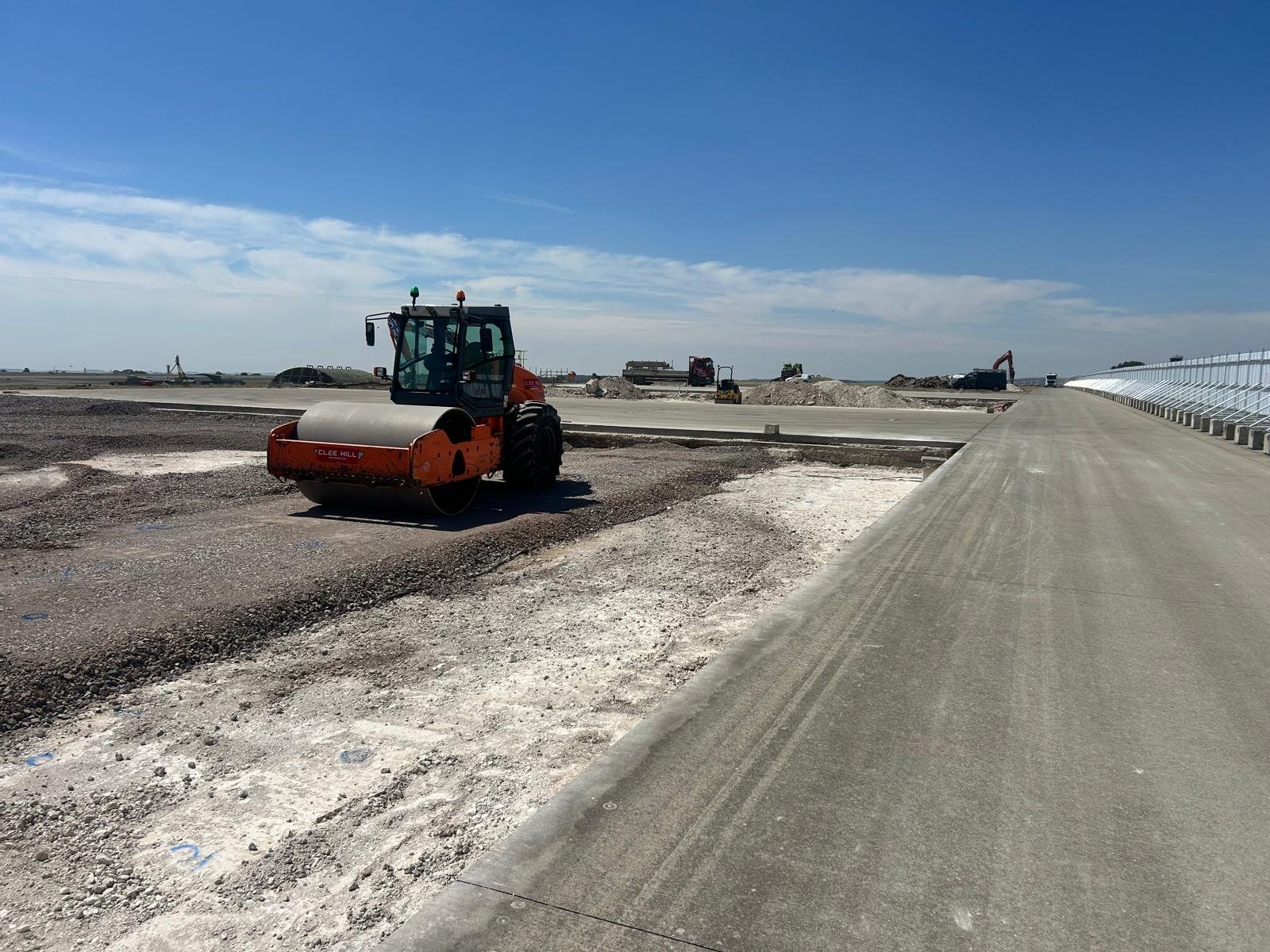
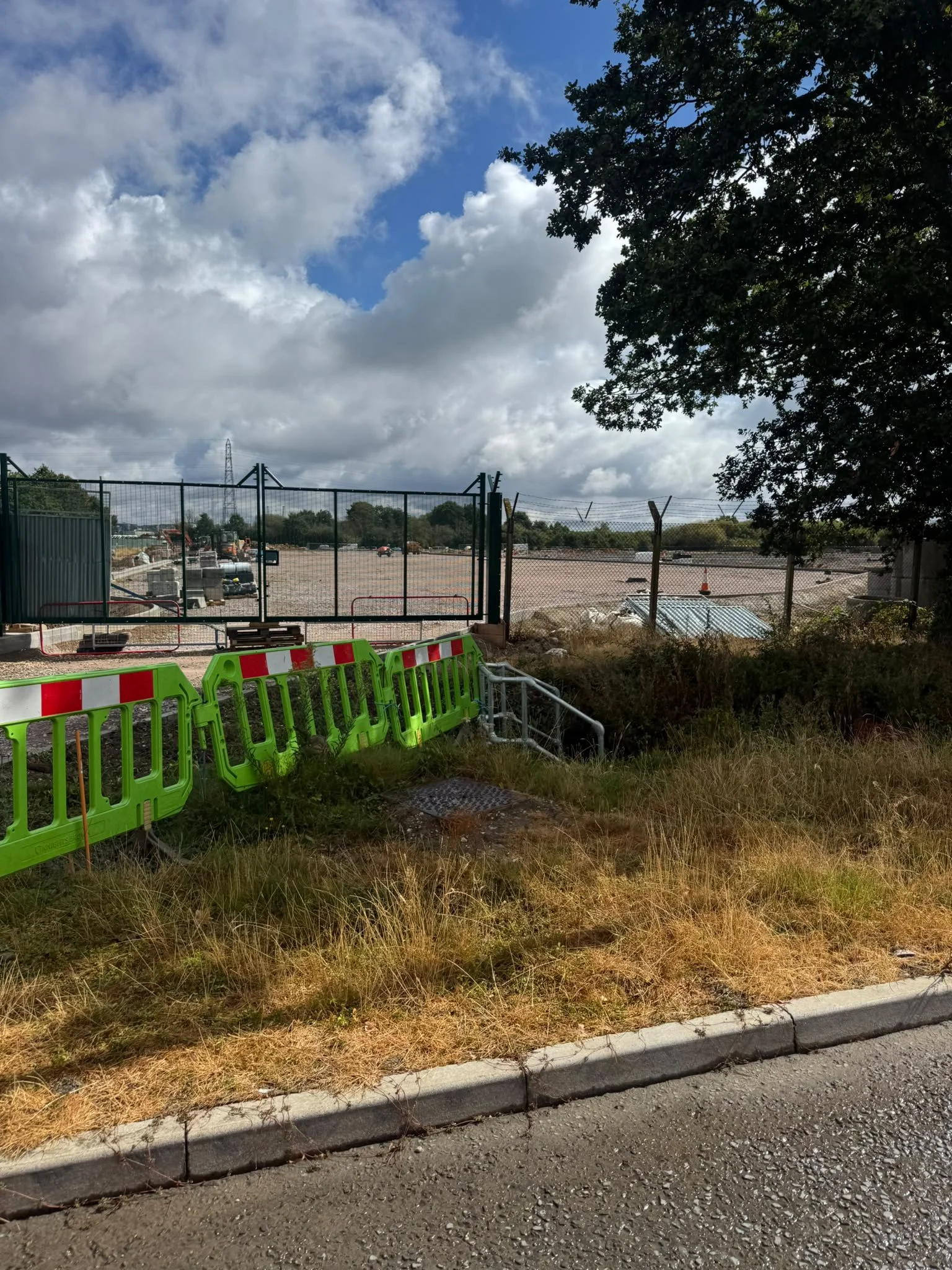
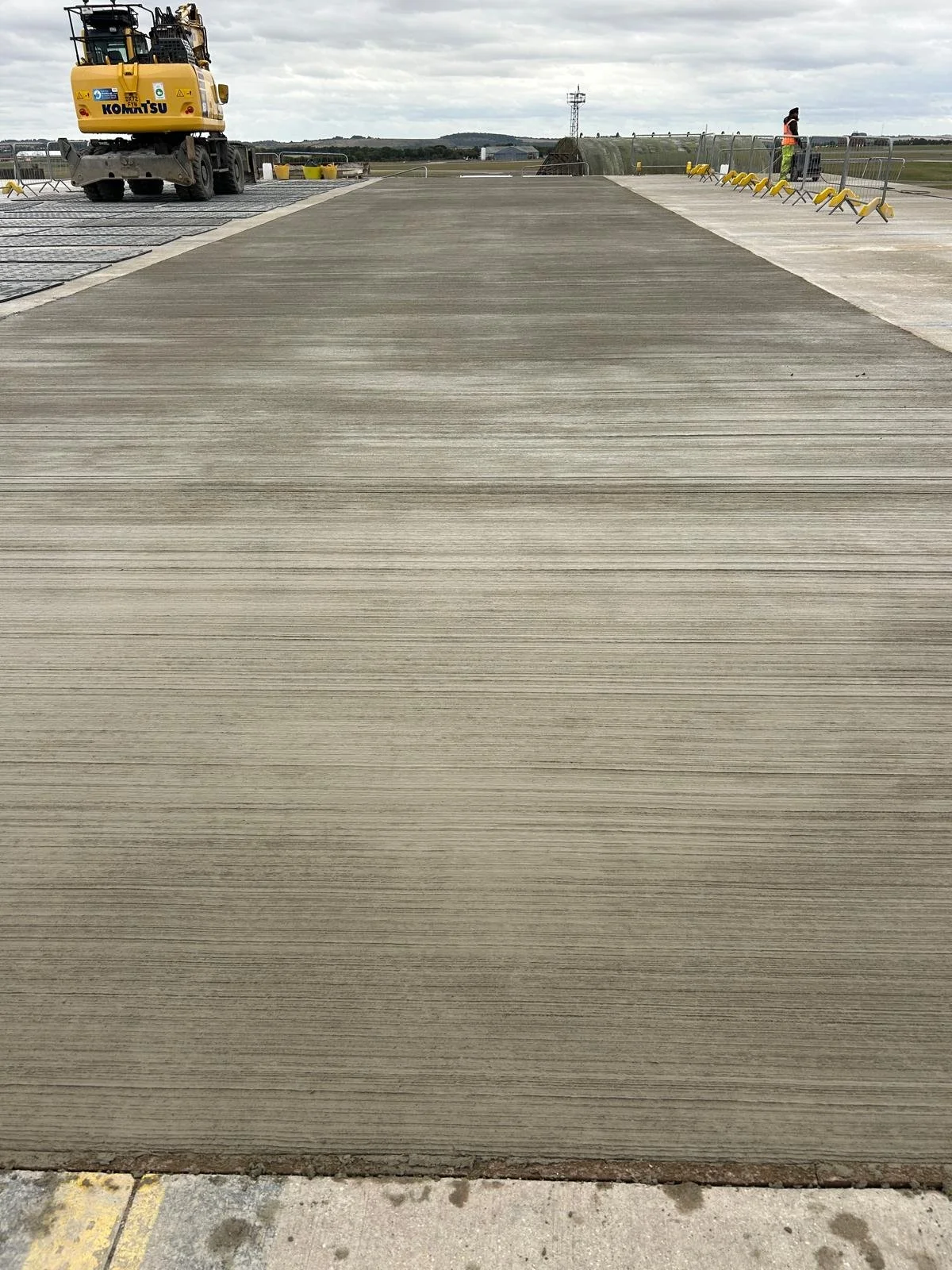
Ryebridge was awarded the contract to lay the concrete on four fingers of an apron at the military aircraft testing site, which is currently undergoing extensive site development, including a high-profile £20 million military testing hangar and significant perimeter/gate security upgrades.
The job was challenging due to the restricted environment, and the need to work to a tight programme with military aircraft already scheduled in to use the apron.
Ryebridge was awarded the contract to lay the concrete on four fingers of an apron at the military aircraft testing site, which is currently undergoing extensive site development, including a high-profile £20 million military testing hangar and significant perimeter/gate security upgrades.
The job was challenging due to the restricted environment, and the need to work to a tight programme with military aircraft already scheduled in to use the apron.
Project Works and Key Quantities
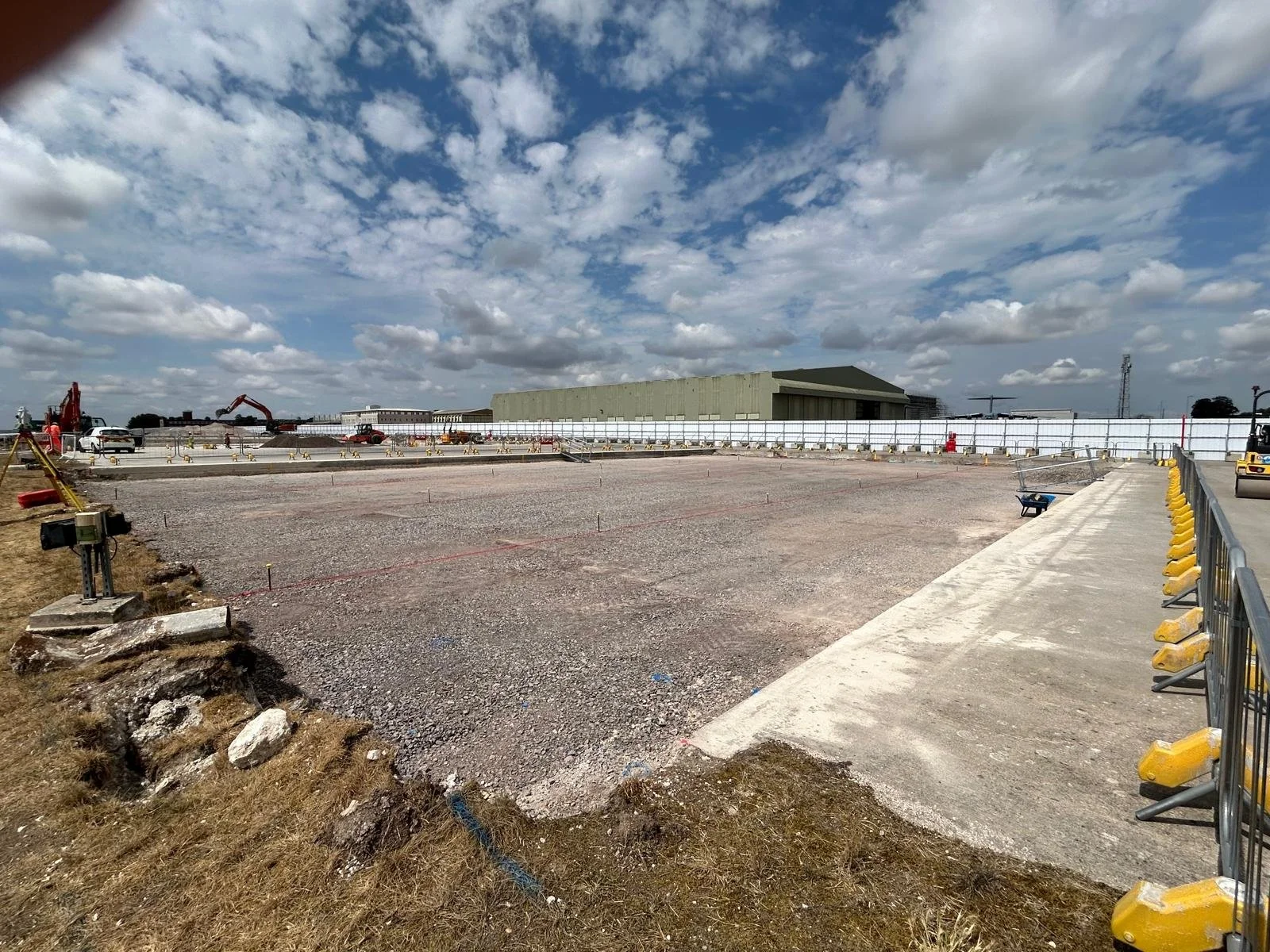
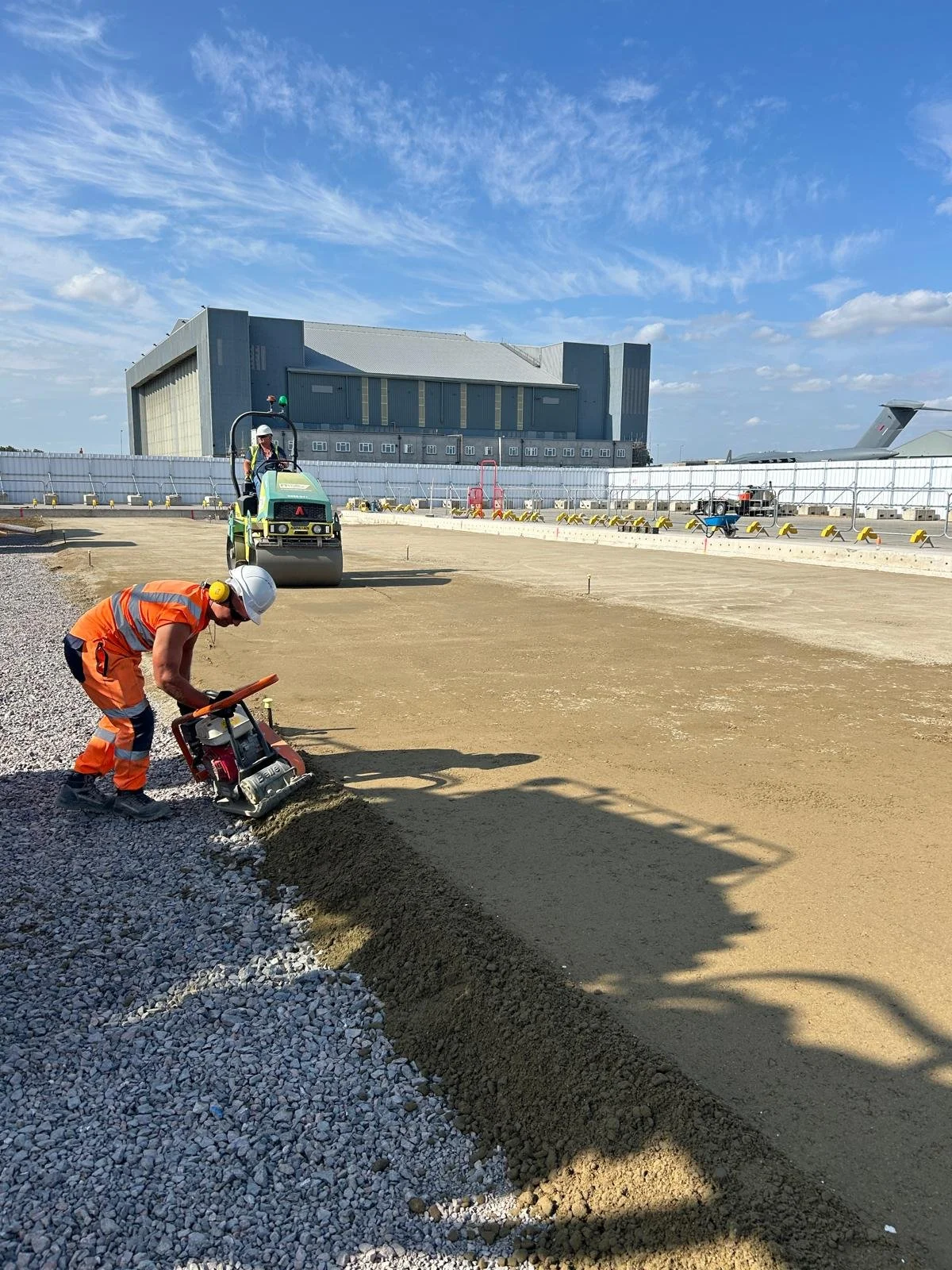
The works involved setting out road pins to give 150mm tape height, and laying 150mm of cement bound aggregate material, which was then coated in bitumen emulsion.
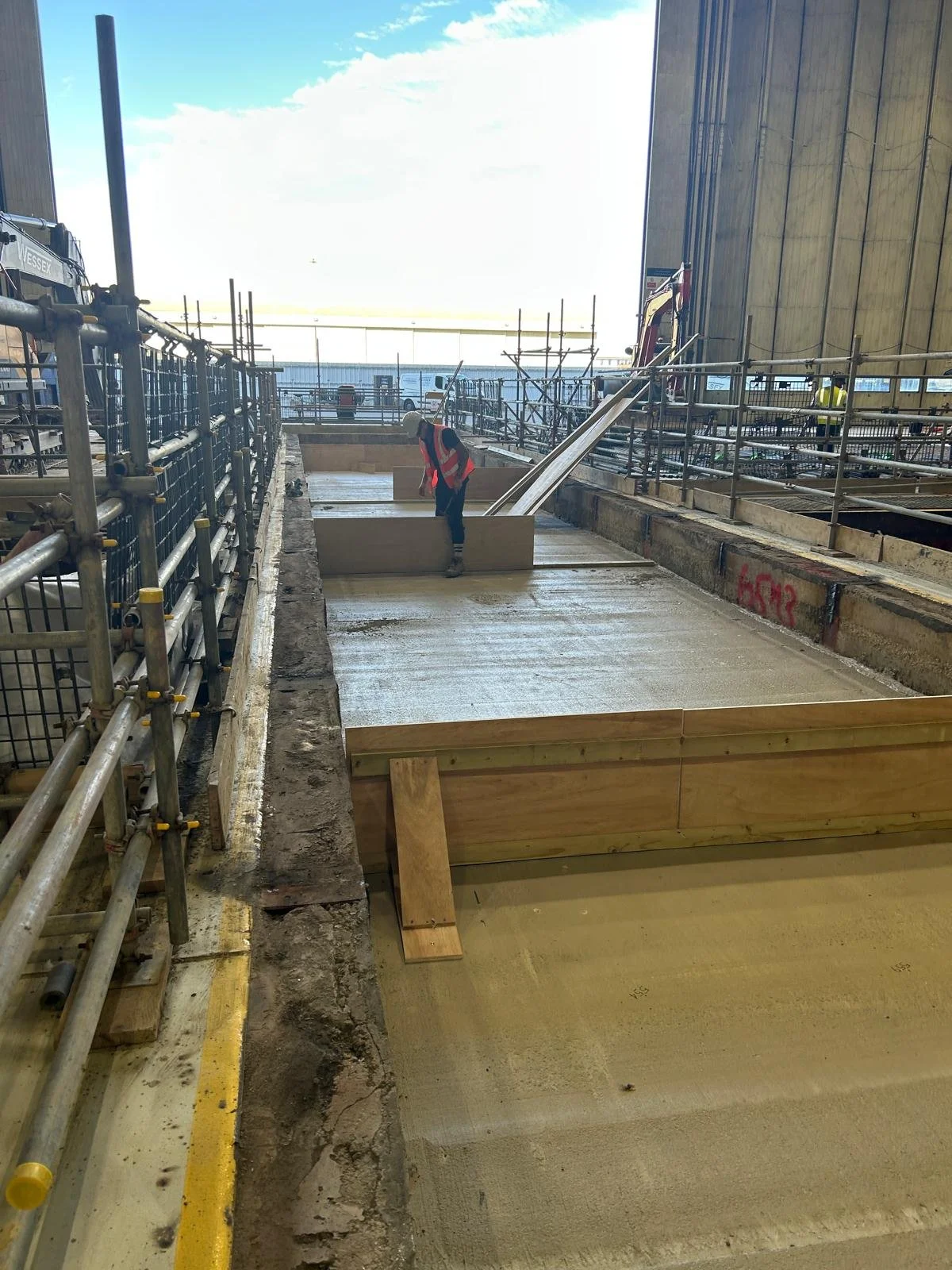
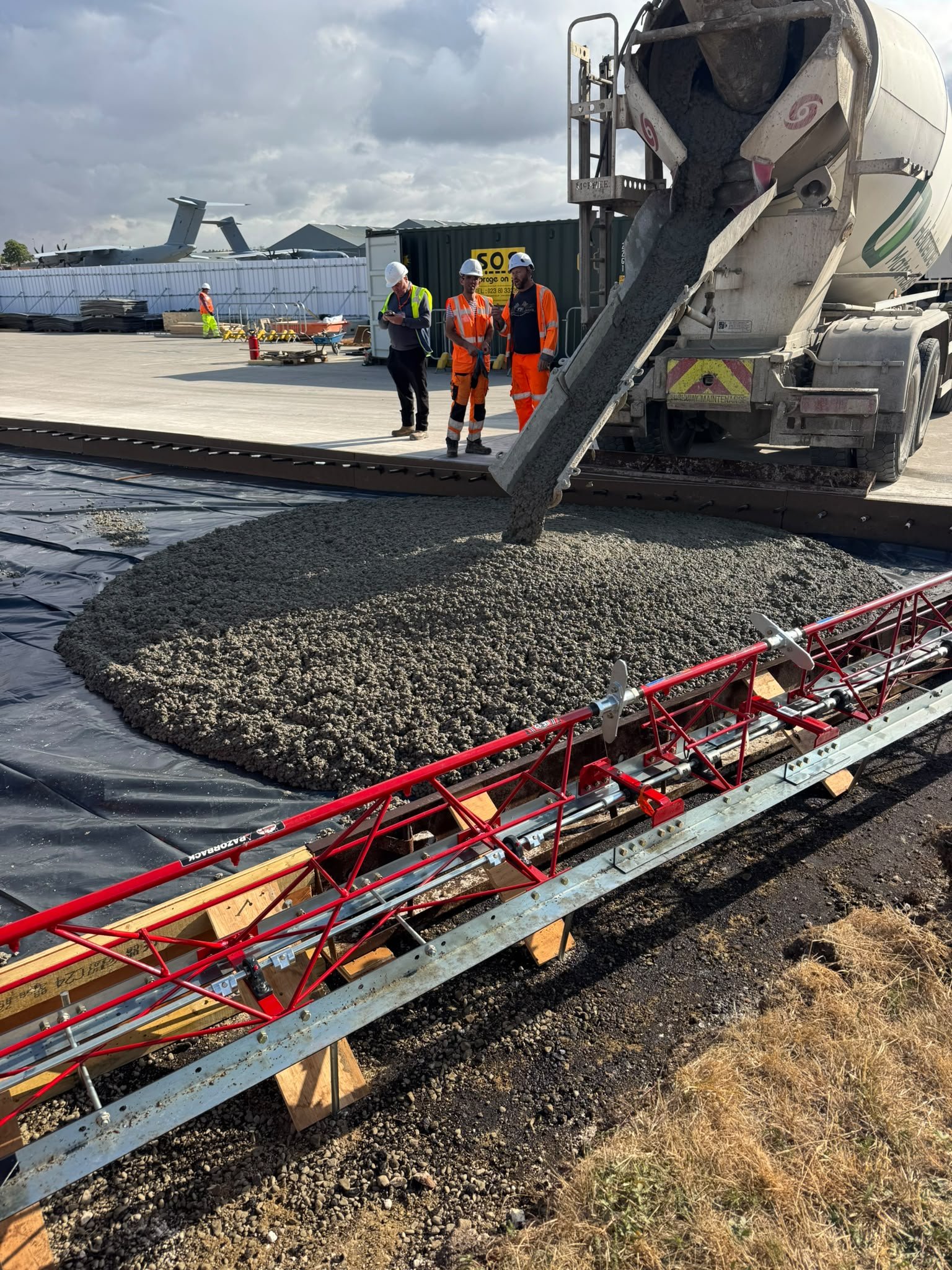
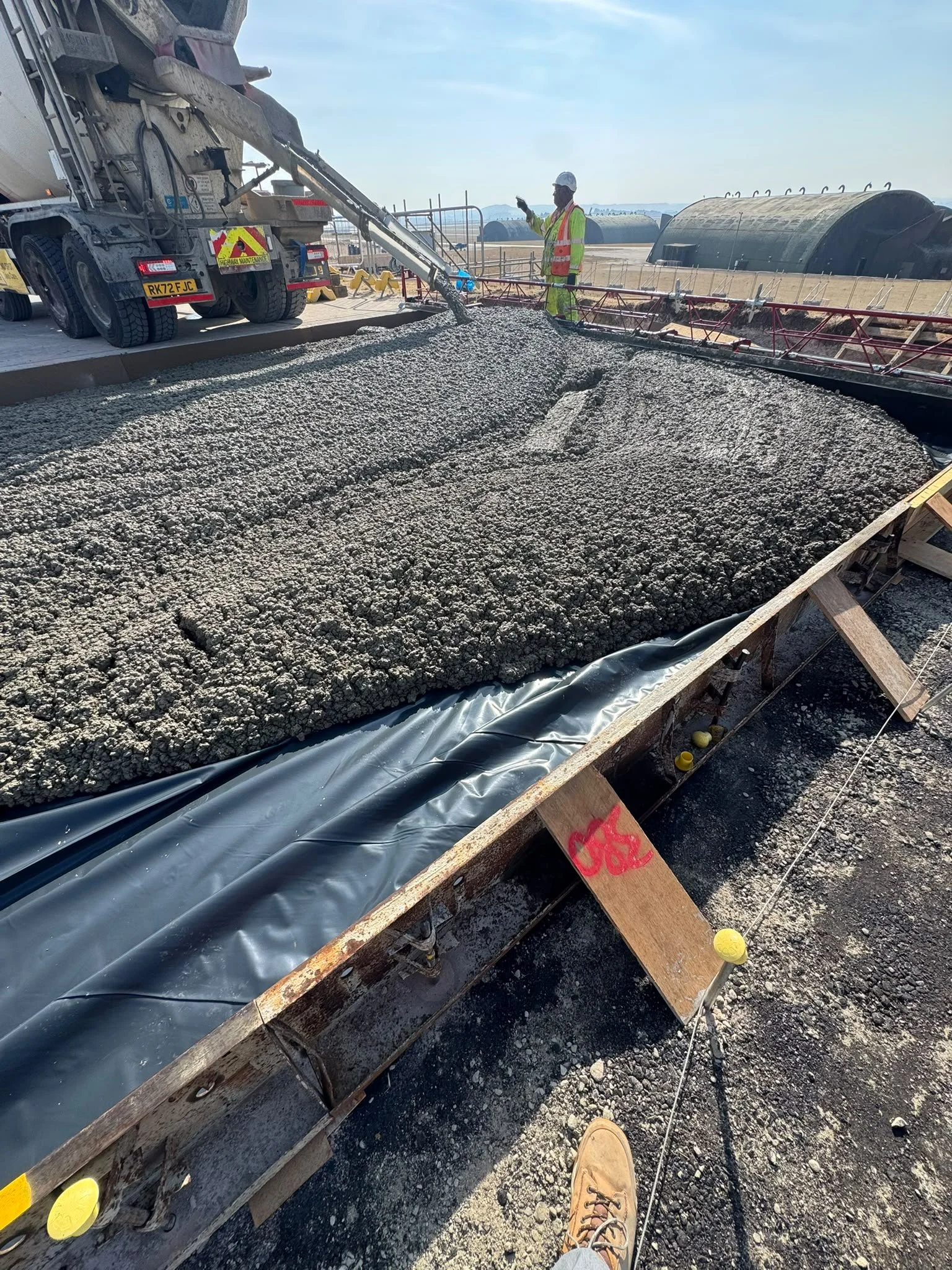
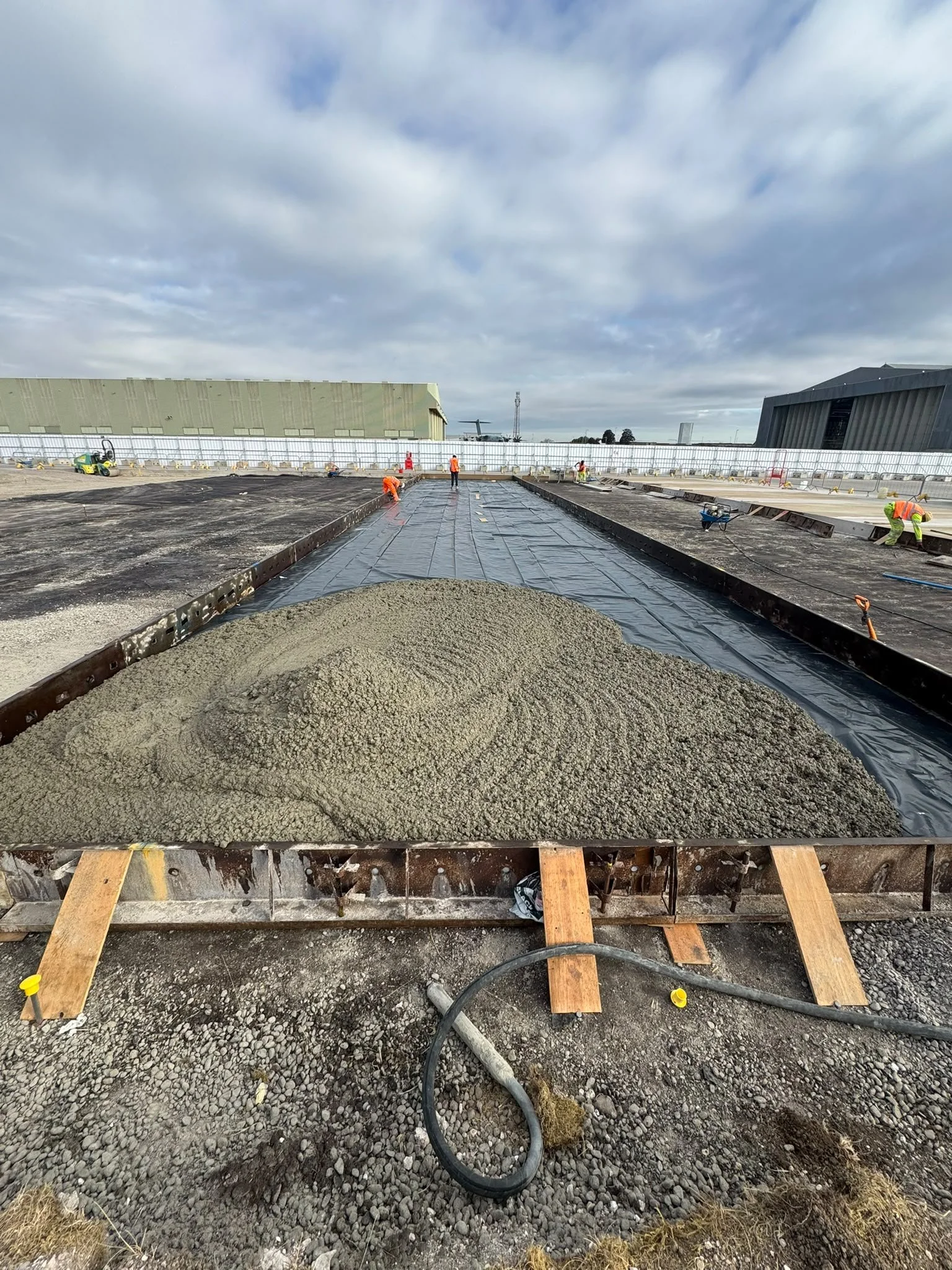
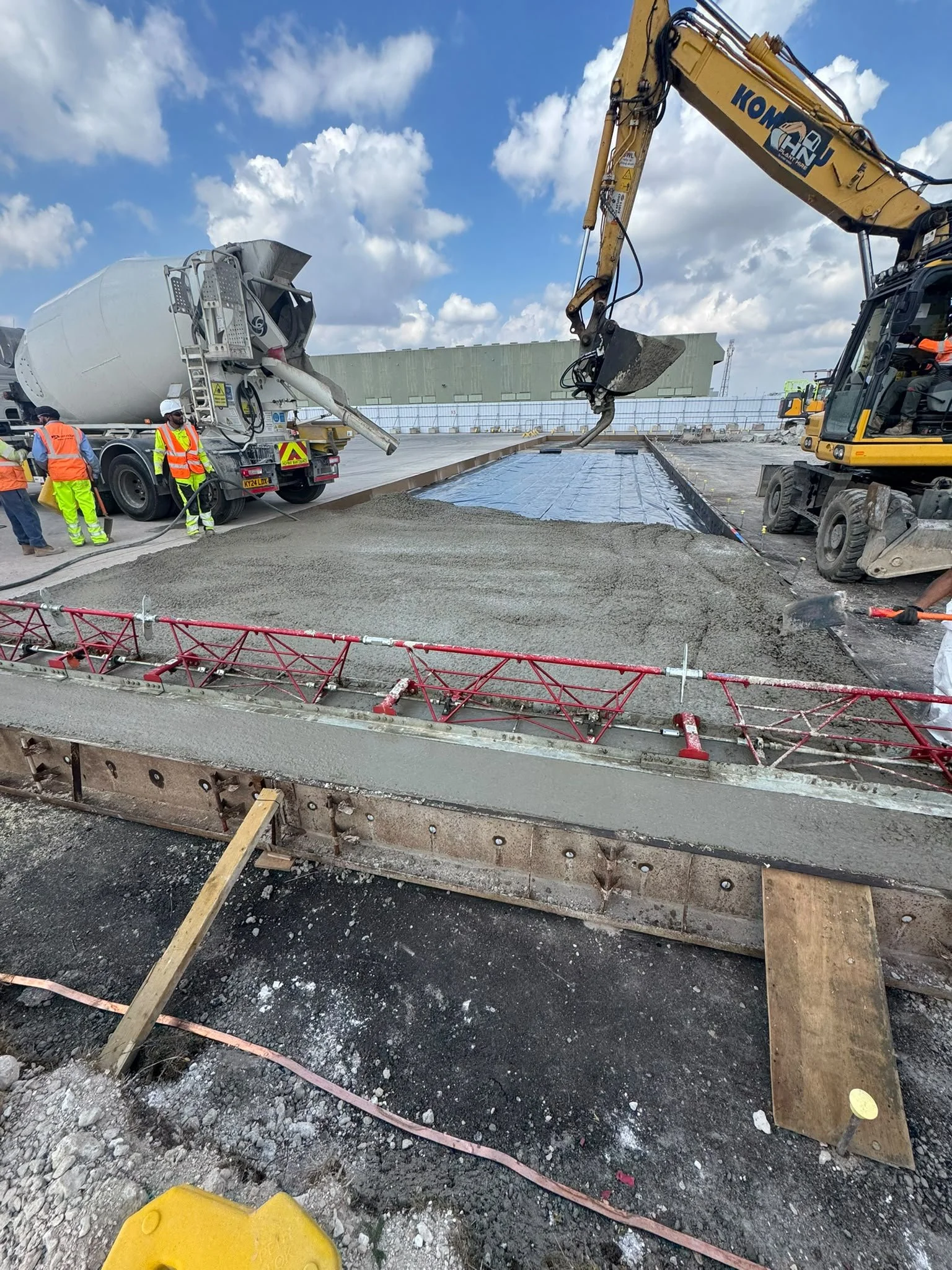
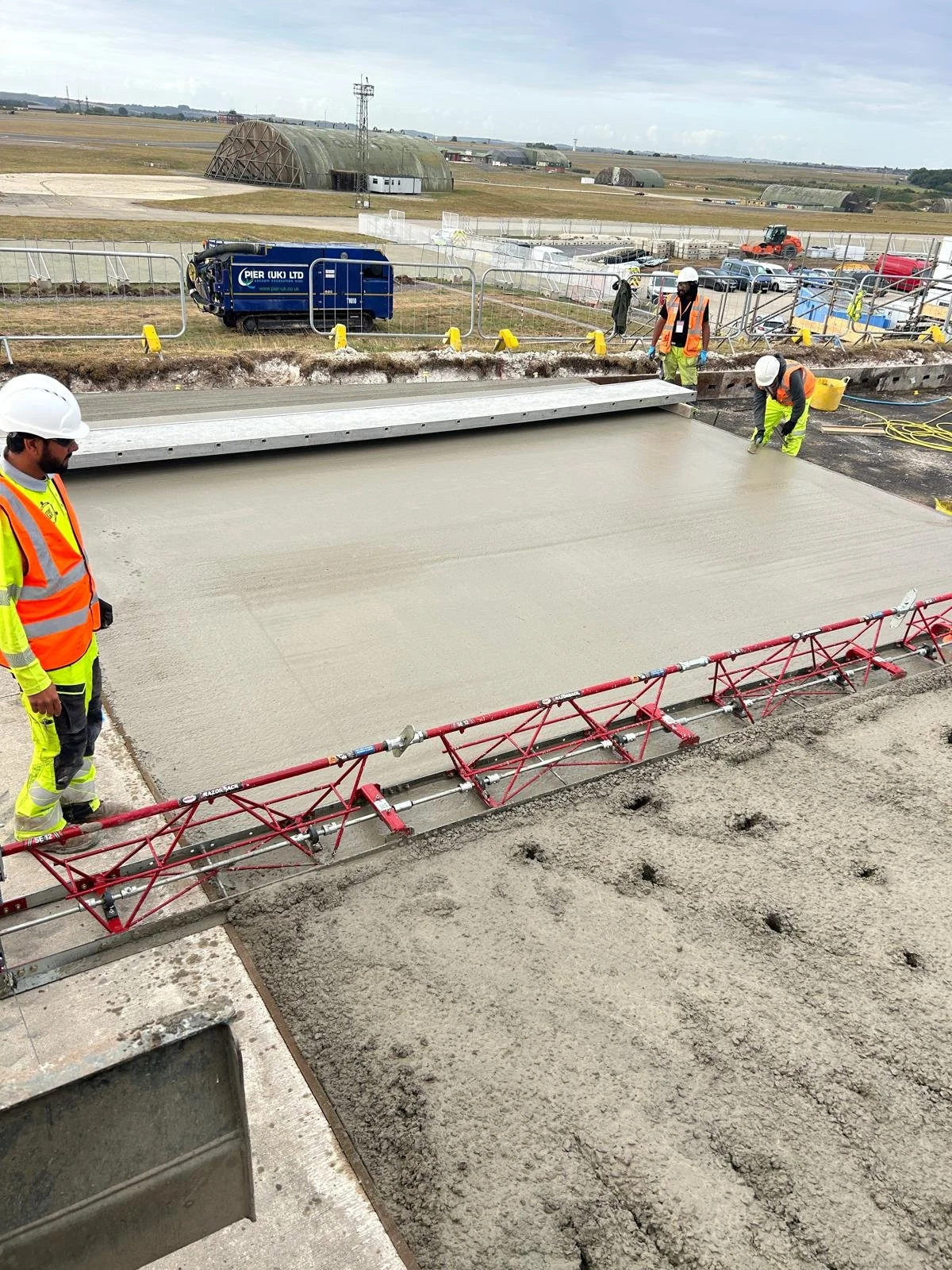
Road pins were set out to give the height and line for the concrete, and steel road form pans were installed.
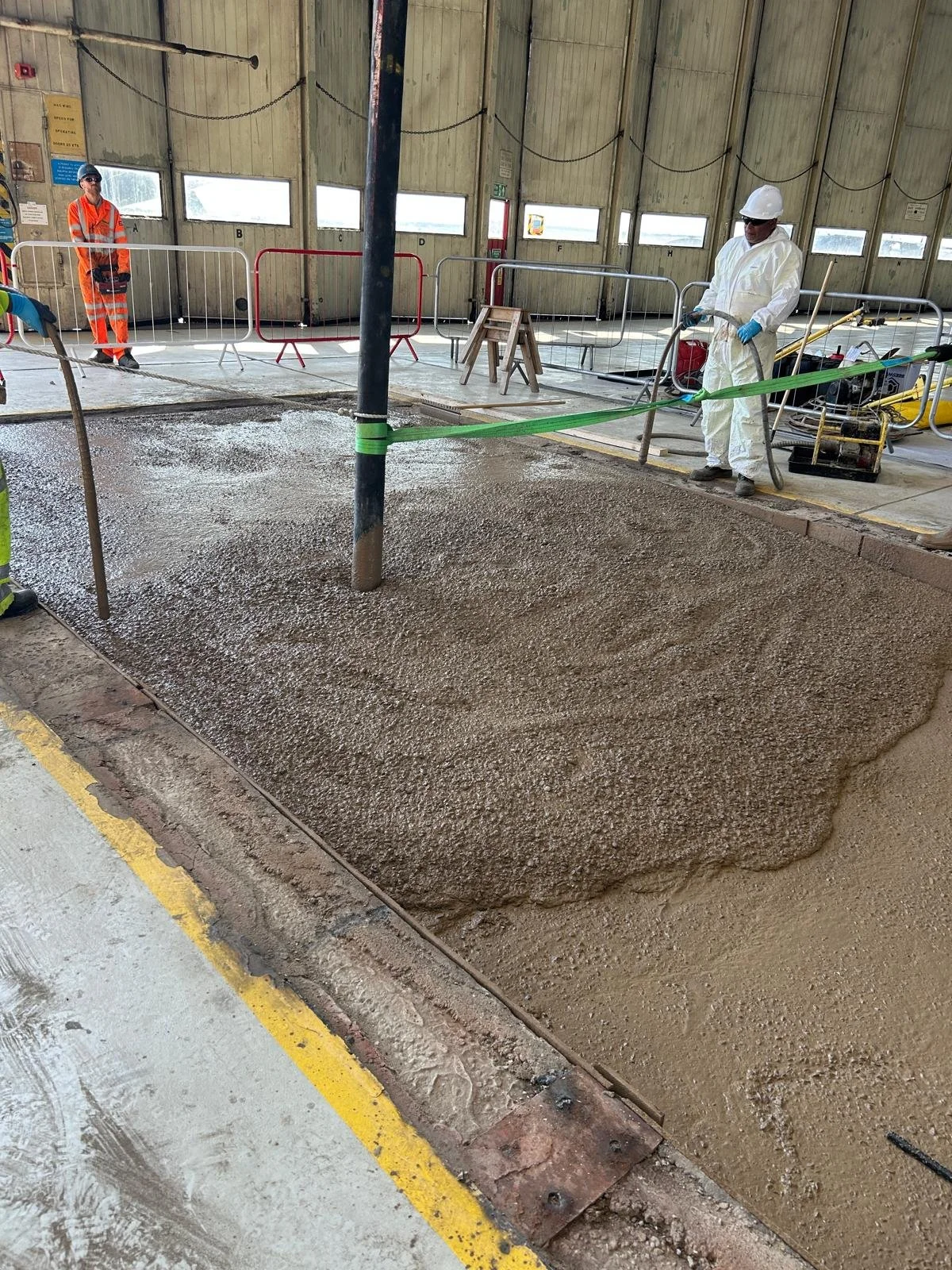
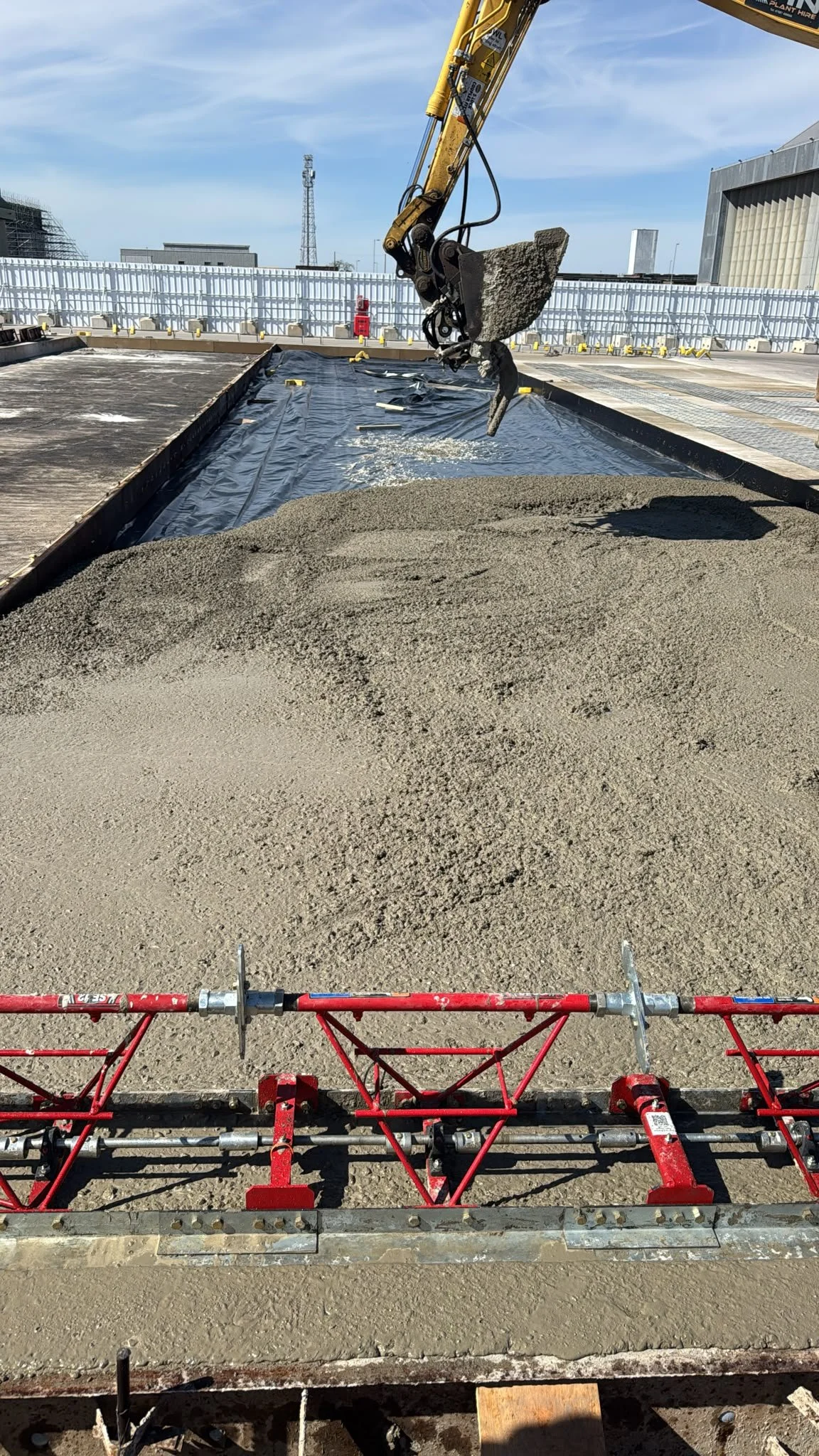
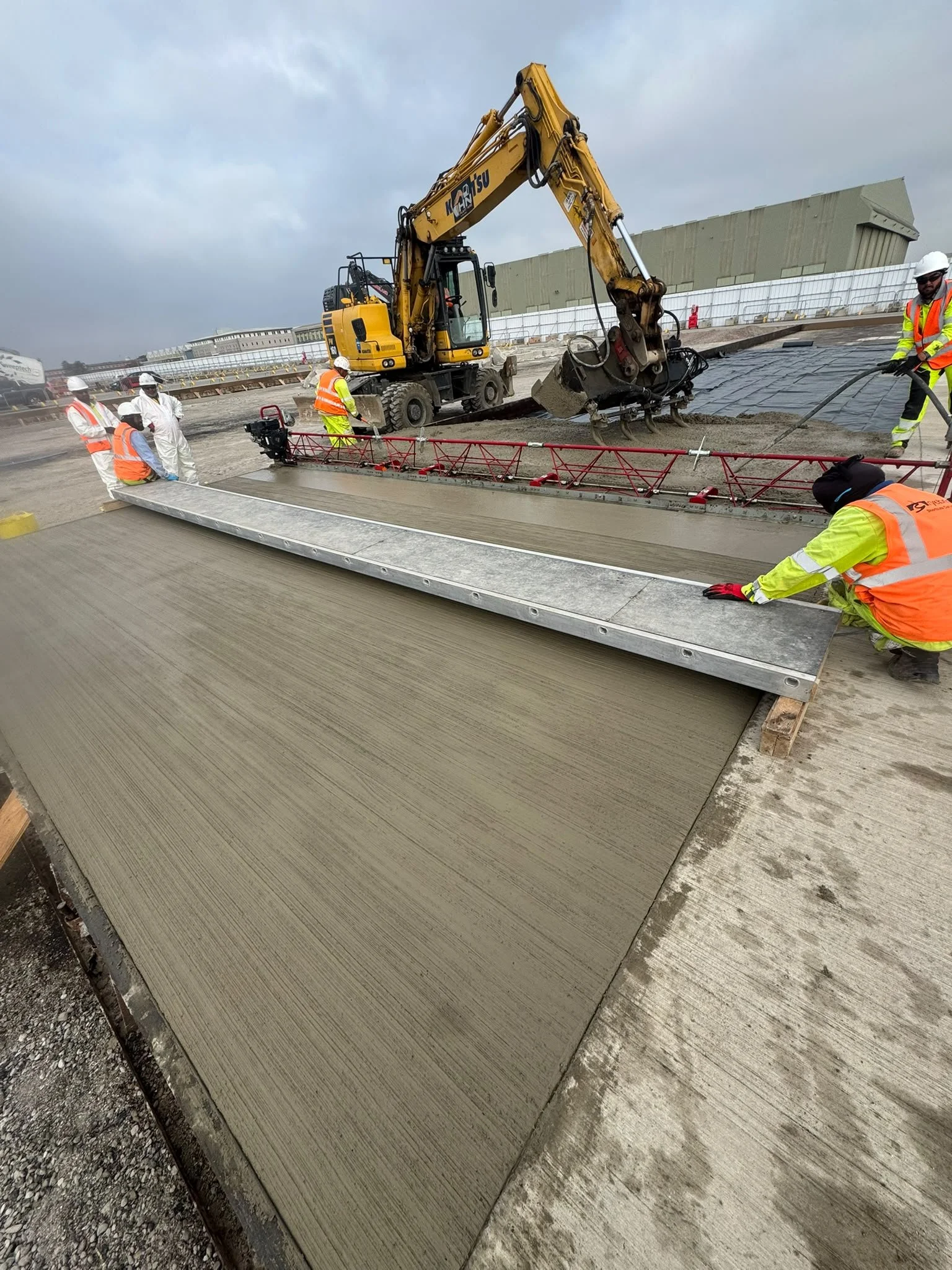
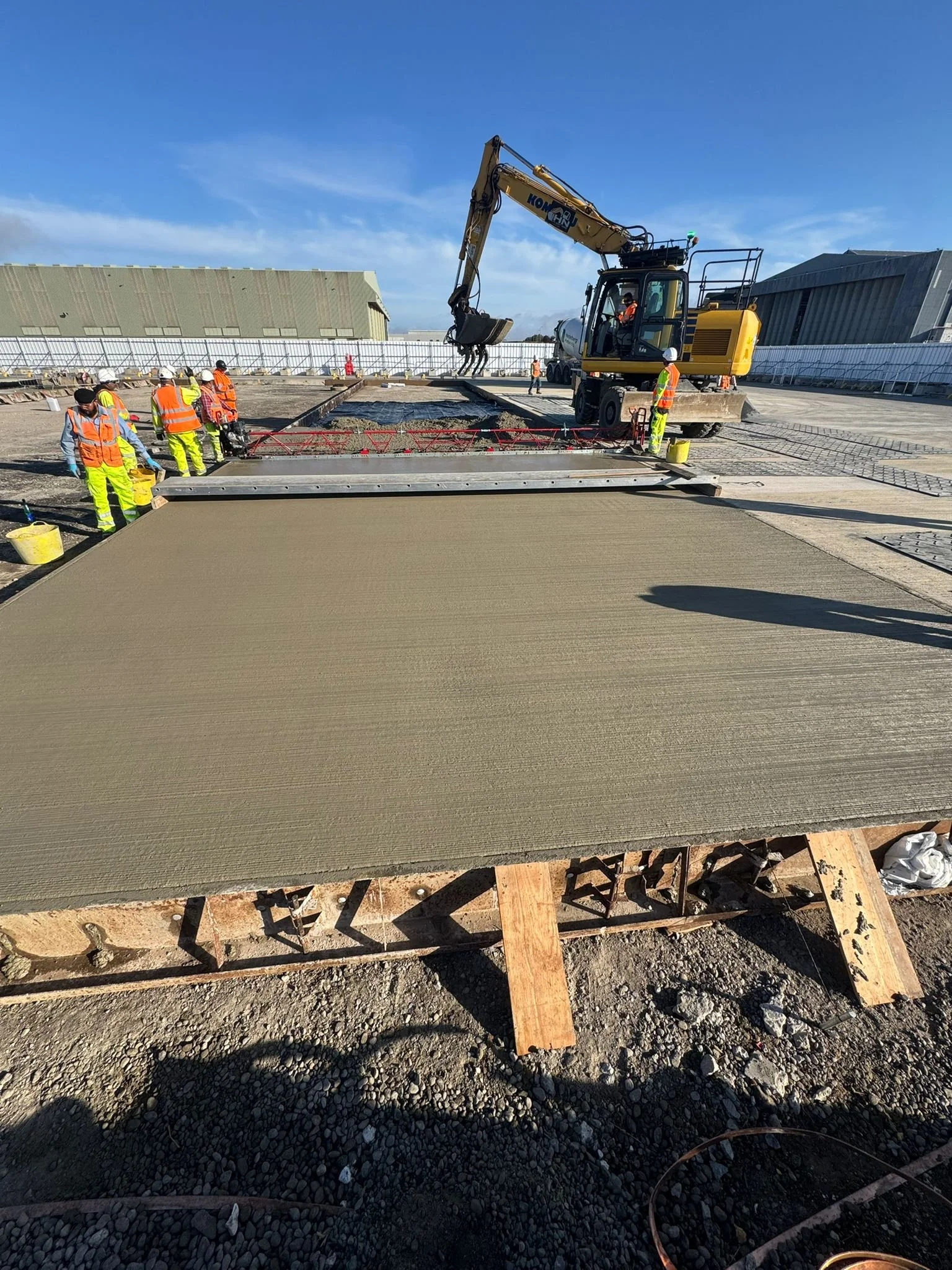
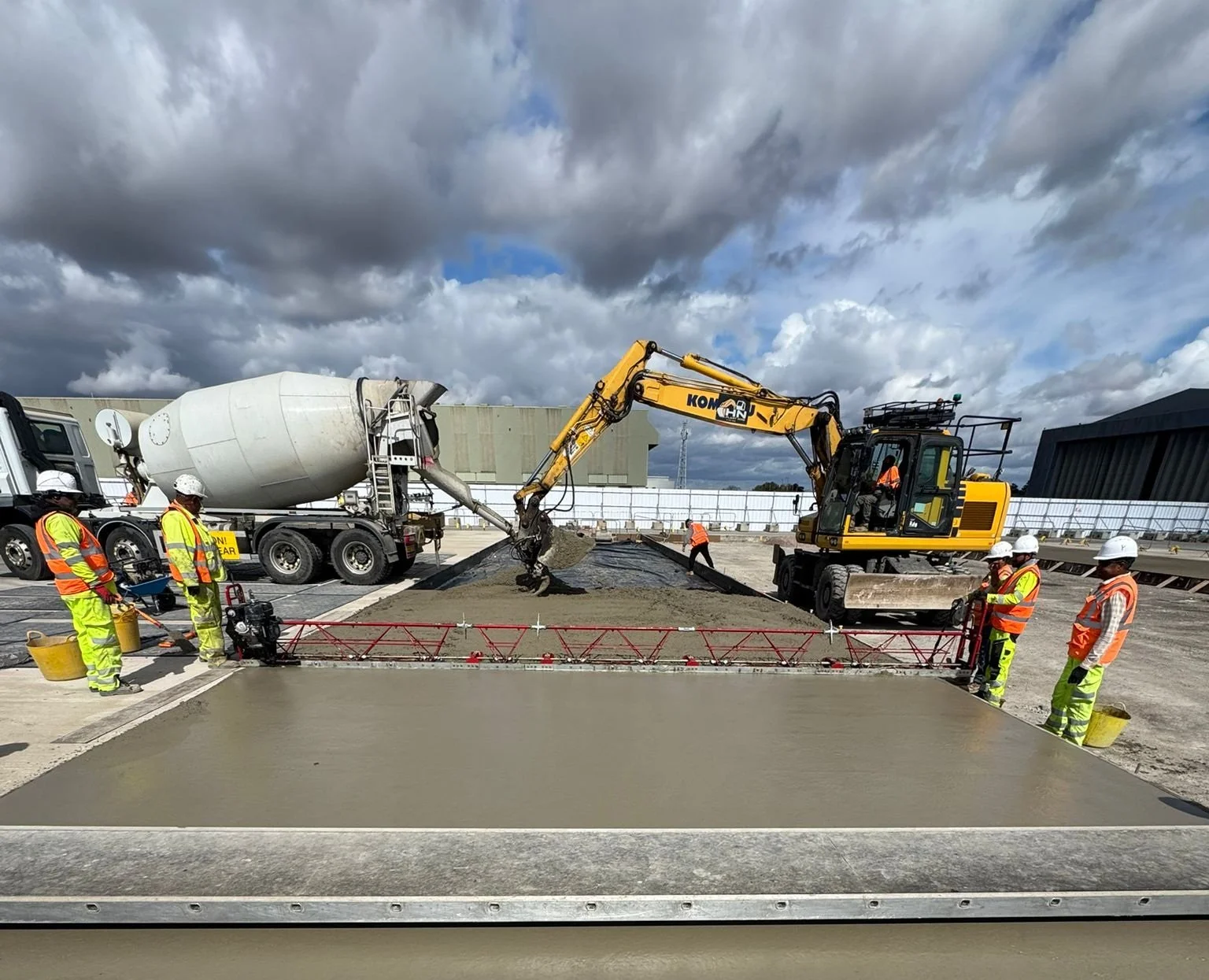
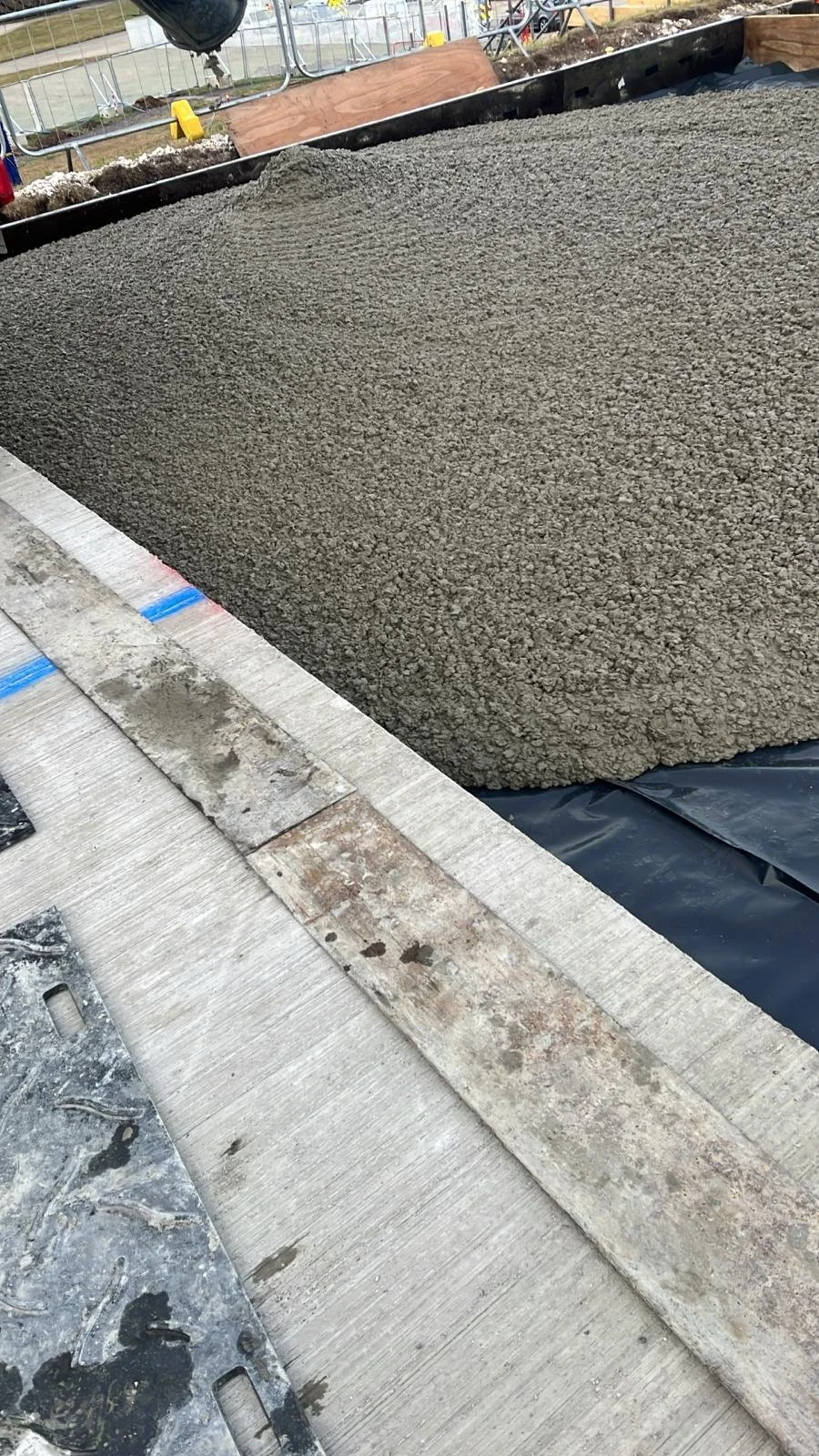
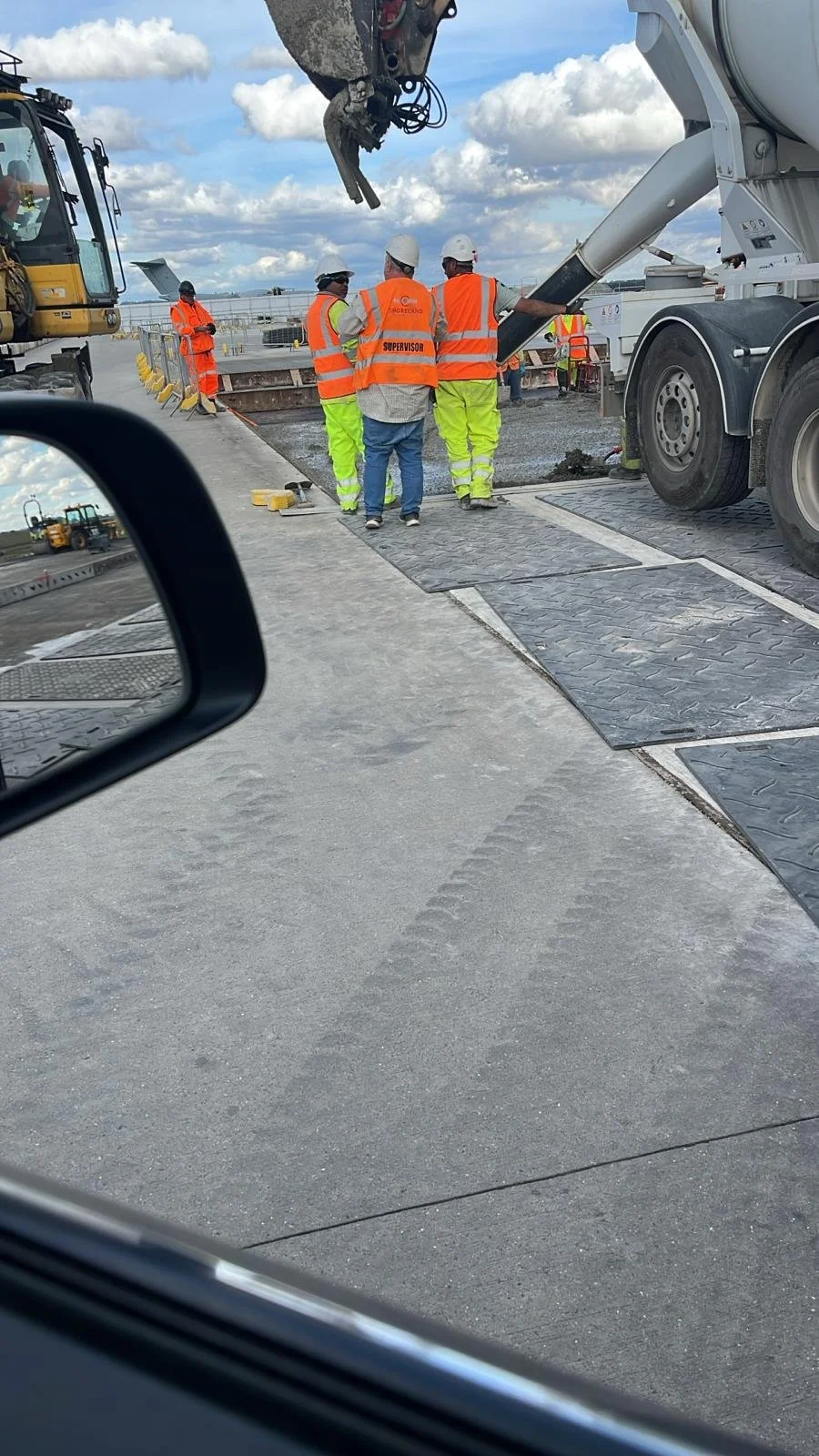
The concrete was poured using a rubber duck and poker bucket, with the razorback run over the slab to compact and level it off.
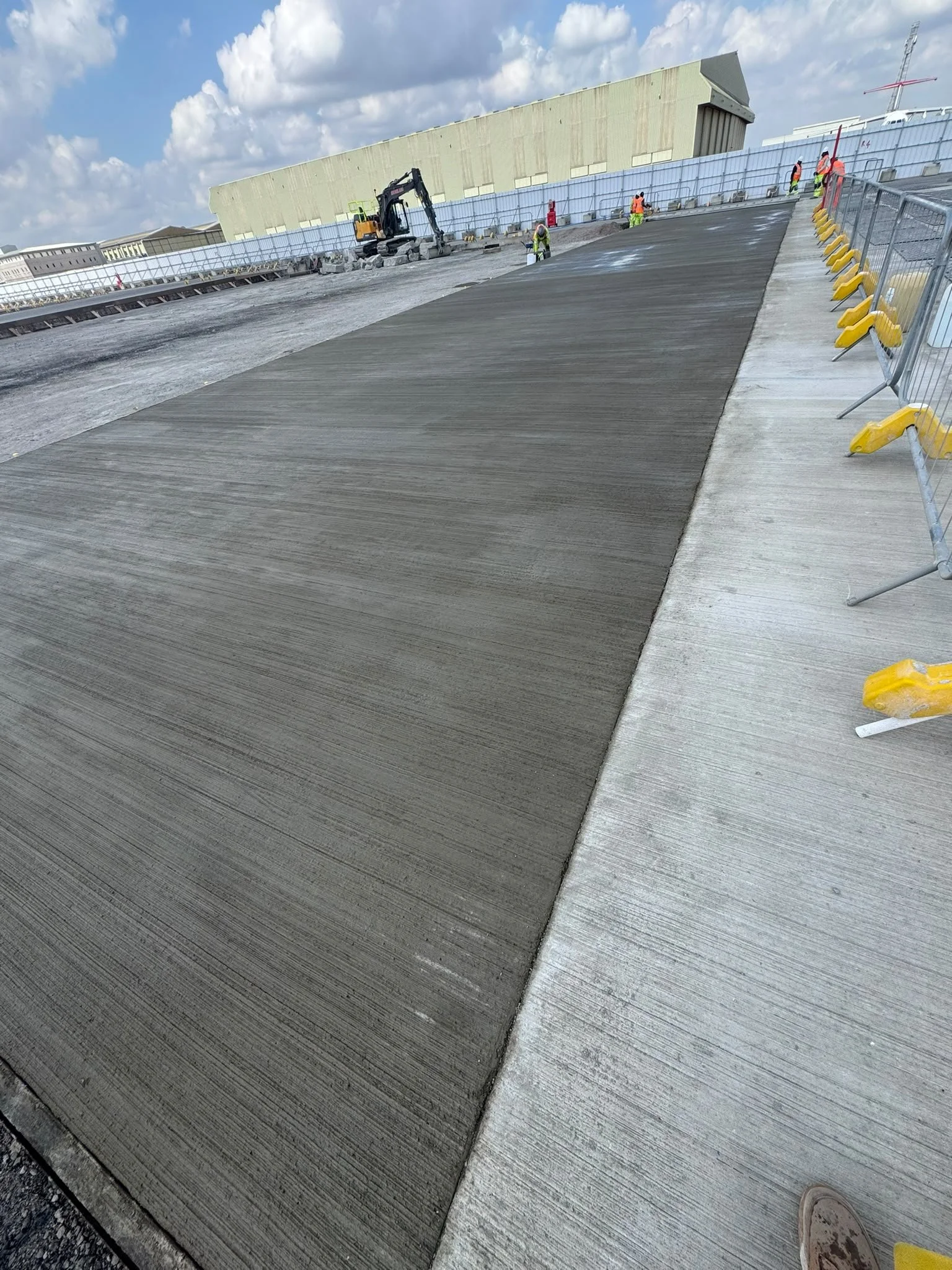
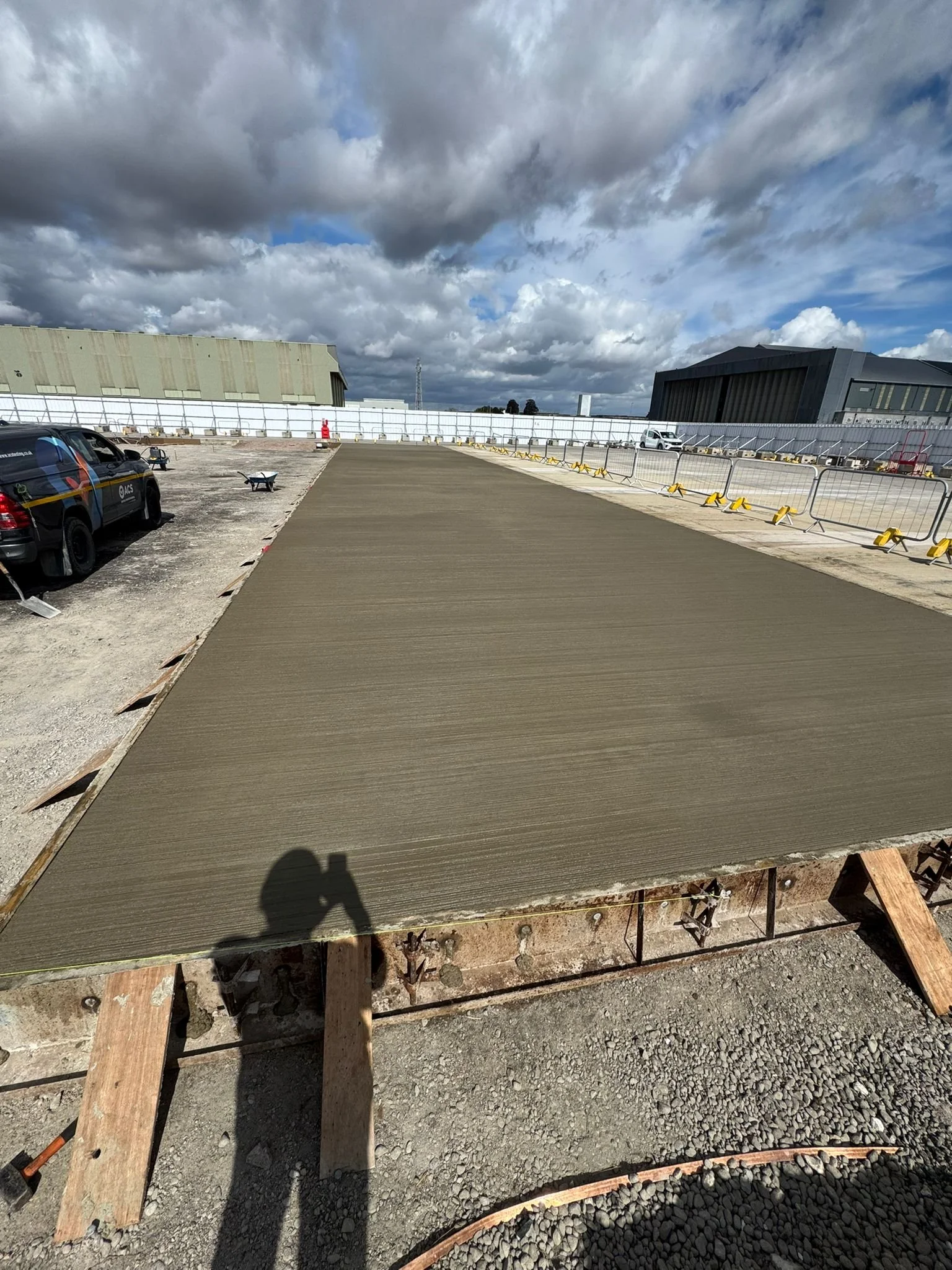
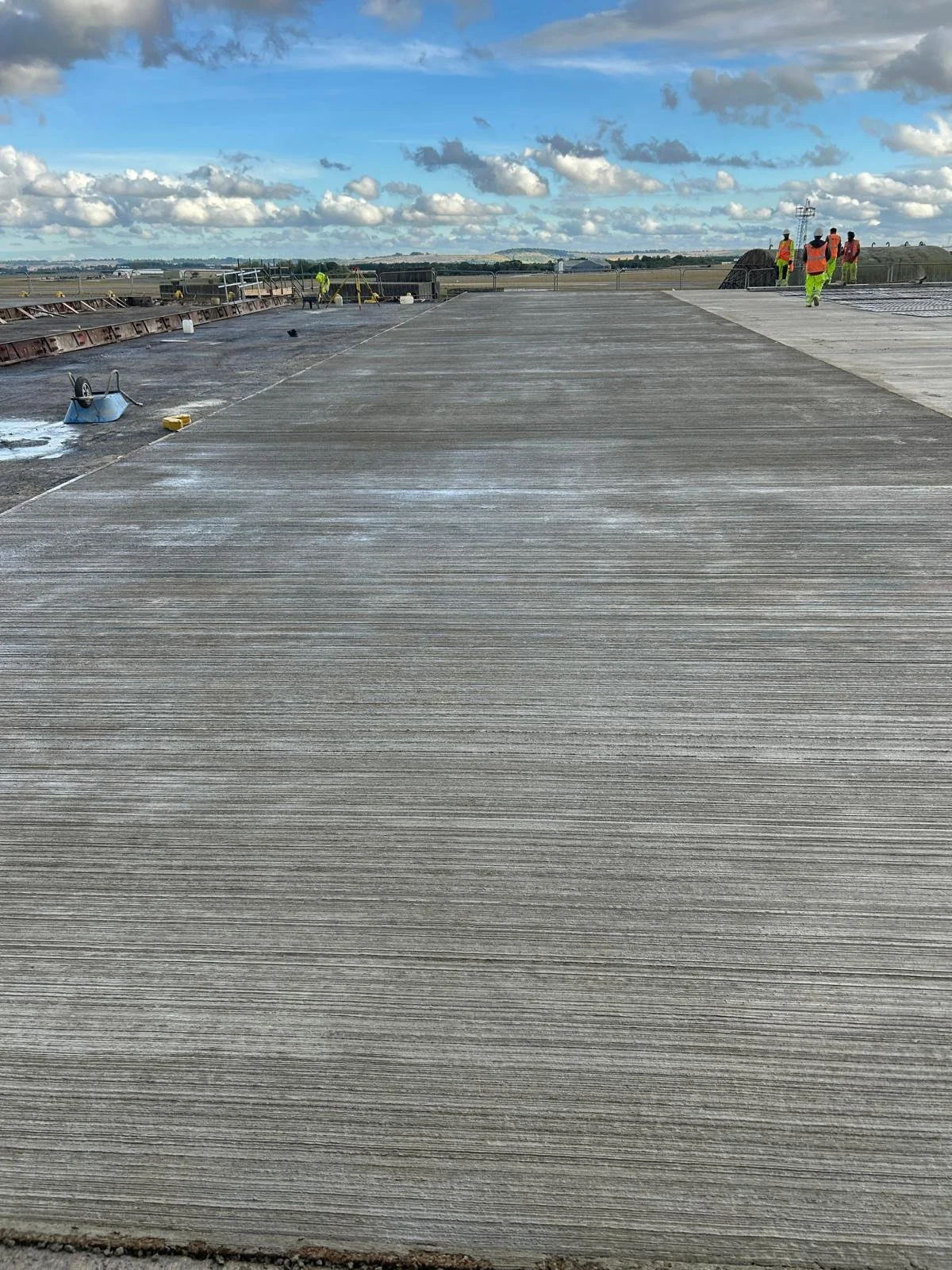
The pavement quality concrete was cured immediately after finishing using approved curing methods to prevent moisture loss and achieve the durability standards required for operational aircraft pavements.
The slab was then sawcut once it was hard enough to work on.
The new apron comprised a 150mm Cement Bound Granular Material (CBGM) base overlaid with 350mm Pavement Quality Concrete (PQC), using limestone aggregate throughout in accordance with airfield pavement specifications.
The apron pavement was constructed in accordance with DIO (Defence Infrastructure Organisation)
Specifications 033 and 051, meeting the requirements of a PCN 43/R/C/W/T airfield pavement design suitable for military aircraft operations.
A comprehensive quality assurance regime was implemented throughout the works, including formation CBR testing, plate load testing, concrete cube strength testing and in-situ density testing of the cement bound granular material to verify compliance with DIO airfield specifications.
The works required strict control of levels and surface regularity, with pavement quality concrete achieving airfield tolerances of 0/+6mm and the CBGM layer constructed within 0/-10mm of design levels.
Construction sequencing had to be carefully managed to maintain progress whilst complying with stringent weather and curing requirements associated with military airfield pavement construction.
Project quantities:
Installed 150mm CBGM approx 994m3;
Laid on average 100m3 per day ;
Installed 350mm PQ concrete over 25 bays (39 x 6.8m) total 2320m3;
laid on average 200m3 per day.
Quality Assurance
Ryebridge implemented a robust quality assurance regime throughout the project to ensure full compliance with DIO Specifications 033 and 051 for military airfield pavements. Quality controls included formation CBR testing at 20m centres, plate load testing, concrete cube strength testing and in-situ density testing of the cement bound granular material. Strict tolerances were maintained throughout construction, with pavement quality concrete finished to within 0/+6mm of design level. Immediate curing procedures and regular sampling regimes ensured the required strength, durability and long-term performance of the apron pavement.
Innovation and Best Practice
Ryebridge was able to draw on more than 16 years’ experience and knowledge working in a live airside environment, often during bad winter weather conditions, to complete the project without any disruption to airport operations.
Ryebridge was also recognised with a Morgan Sindall Safety Award for its work on the site.
The monthly award recognised the Ryebridge site team for their high standards of health and safety, which included wearing of full Personal Protection Equipment at all times, and using four mounted pokers on their excavator to reduce the risk of HAVS (Hand-Arm Vibration Syndrome).
Senior site manager Thomas Wartnaby said: “Ryebridge staff pride ourselves on maintaining the highest standards of health and safety as a matter of course, but even so it’s great to receive recognition for our efforts.
“This really was an award for the whole team, so I’d like to thank everyone involved.”